Okinawan food is one of the great pleasures of a trip to the islands. Shaped by the Ryukyu Kingdom’s trade with China and Southeast Asia, by mainland Japan, and later by the American presence, it’s quite different from what you’ll find in Tokyo or Kyoto: heartier, porkier, full of tropical vegetables, and best enjoyed with a cold beer or a glass of awamori.
This guide covers the dishes to try, what to drink, where to eat, and practical tips for different diets.
What Makes Okinawan Food Different
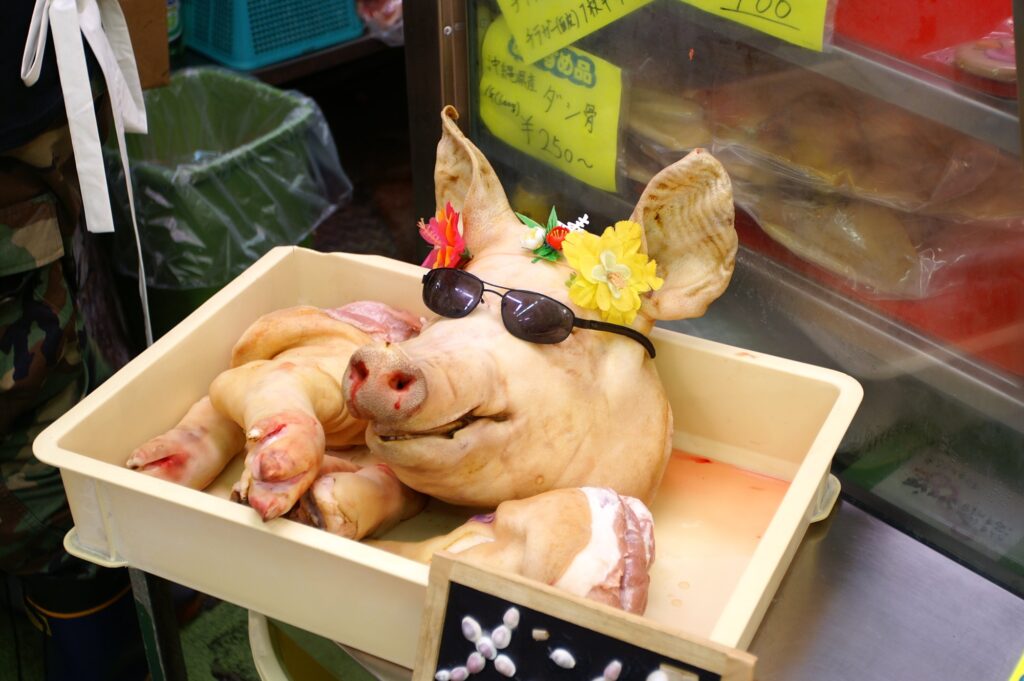
Traditional Okinawan cooking draws on what grows well in a warm climate and on centuries of trade. Pork is central; locals like to say that every part of the pig is used except the squeal. Bitter melon, sweet potato, seaweed, tofu, and tropical fruit are everyday ingredients. Food is also closely linked to health in local tradition, with the idea of nuchi gusui, or “food as medicine.”
After 1945, the long US administration brought ingredients like Spam, corned beef, and steak, which were absorbed into local cooking and remain popular today.
Your First-Day Food Checklist
Short on time? Here are six easy wins that give a quick taste of the islands:
- A bowl of soki soba at a local noodle shop.
- Goya champuru as part of a set meal at a shokudo.
- A pork tamago onigiri from a convenience store or specialty stand for breakfast.
- Umibudo sea grapes with an ice-cold Orion beer.
- Sata andagi doughnuts from a market stall.
- A small glass of awamori with water and ice at an izakaya.
Dishes to Try
Okinawa Soba
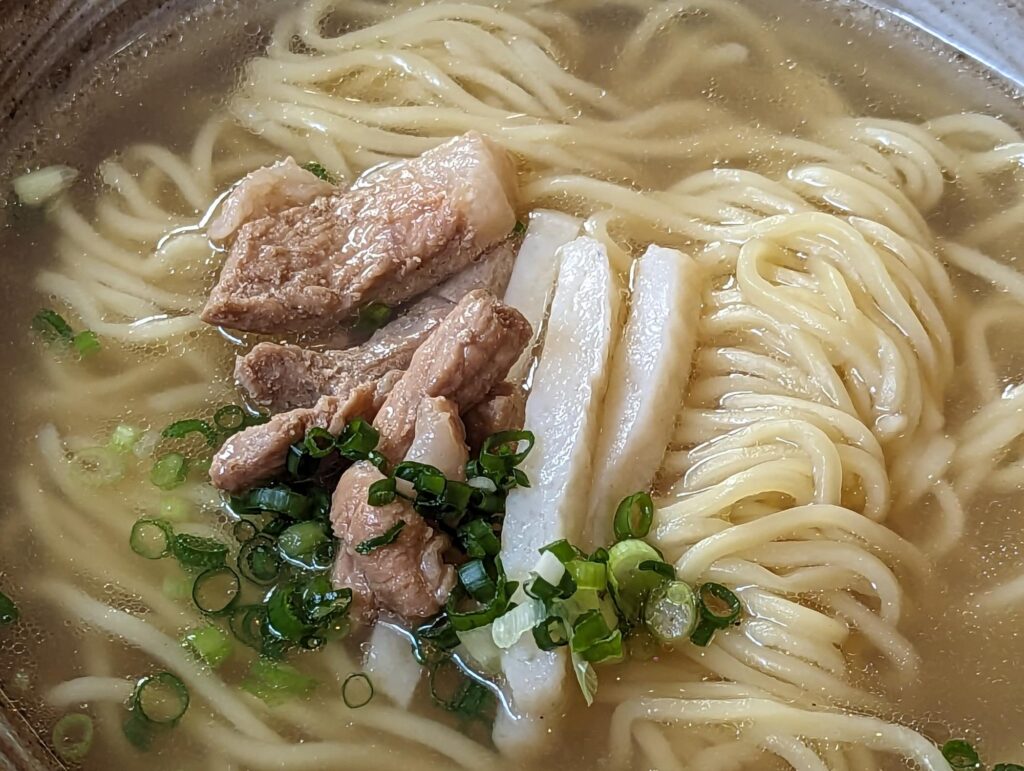
Okinawa’s comfort food is a bowl of thick wheat noodles in a clear pork-and-bonito broth. Despite the name, it contains no buckwheat. Toppings usually include slices of braised pork belly (sanmainiku) or pork ribs (soki), fish cake, and green onion. Add a few drops of koregusu, chili peppers steeped in awamori, from the bottle on the table. Regional styles include Yaeyama soba, with thin round noodles, and Miyako soba. Okinawa Soba Day is celebrated on October 17.
Goya Champuru
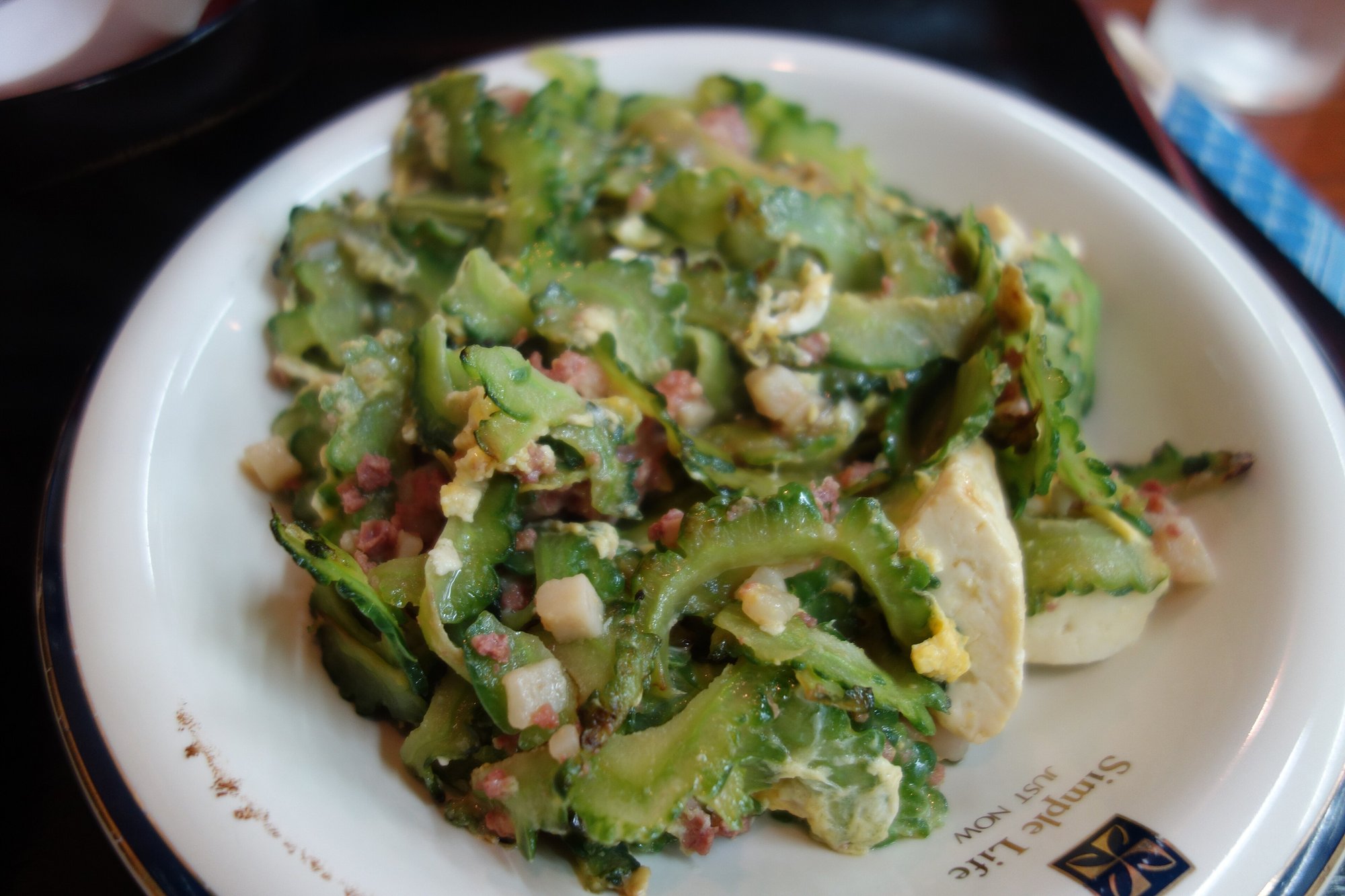
Champuru means “mixed up” and refers to stir-fries of tofu, vegetables, egg, and pork or Spam. The most famous version uses goya, bitter melon. Its bitterness is softened by the other ingredients, and many visitors end up loving it. Look also for fu champuru (made with wheat gluten) and somen champuru (stir-fried thin noodles).
Rafute
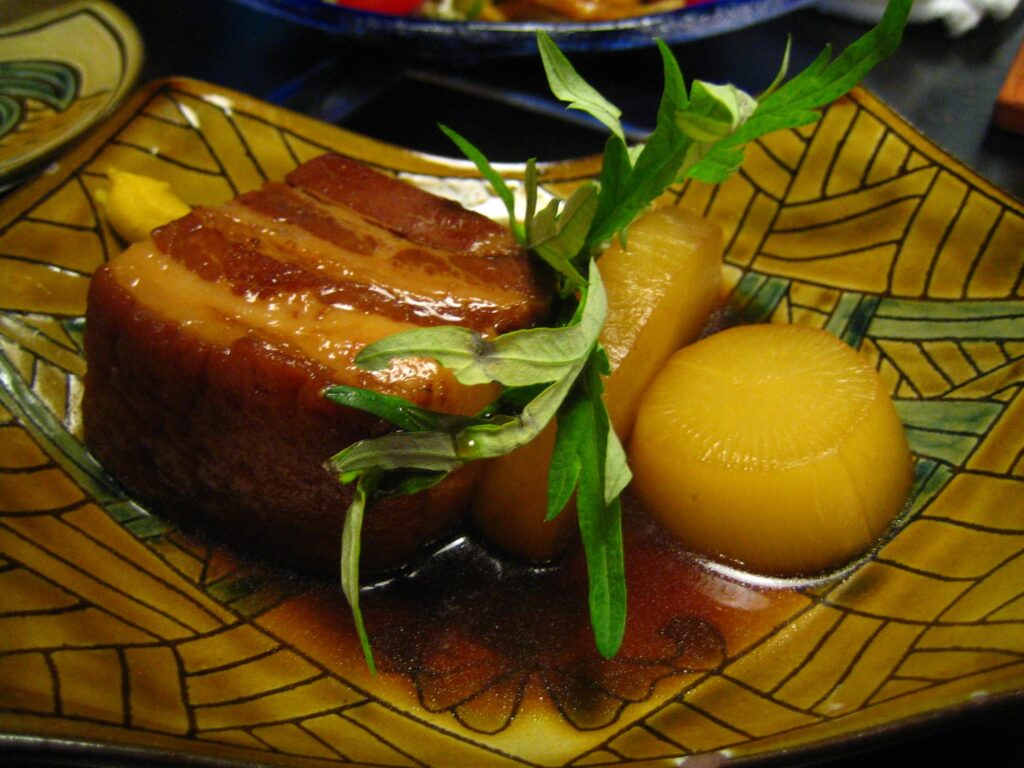
Cubes of pork belly simmered slowly in awamori, soy sauce, and brown sugar until meltingly tender. Rafute has roots in the royal court cuisine of the Ryukyu Kingdom and often appears on Okinawa soba or as a dish on its own.
Other Pork Dishes
- Mimigaa: thinly sliced pig’s ear, served cold with vinegar or peanut sauce; crunchy and surprisingly refreshing.
- Ashitibichi: pig’s trotters stewed until soft, often in a clear soup.
- Pork tamago onigiri: a slice of Spam-style luncheon meat and an omelet wrapped with rice and seaweed; a popular grab-and-go breakfast.
- Agu pork: a local heritage breed prized for its flavor, served as shabu-shabu or grilled.
Taco Rice
A true Okinawan invention, taco rice is taco filling, seasoned ground meat, lettuce, cheese, and tomato, served on a bed of rice. It’s credited to a restaurant in Kin, near Camp Hansen, in 1984, created as a cheap, filling meal for US service members. It’s now found all over the islands.
Seafood and Seaweed
- Umibudo: “sea grapes,” a seaweed with tiny bubbles that pop in the mouth, eaten with a light vinegar dip.
- Mozuku: a slippery brown seaweed, served in vinegar or as crispy tempura.
- Island fish: brightly colored reef fish such as irabuchaa (parrotfish) are served as sashimi or fried. Choose a fish at a market and have it cooked for you.
- Fish tempura: Okinawan tempura has a thicker, fluffier batter than the mainland version and is often eaten as a snack.
Tofu
Shima-dofu, island tofu, is firmer and saltier than mainland tofu, and stands up well in champuru. Yushi-dofu is soft, unpressed tofu served warm in broth. For the adventurous, tofuyo is cubes of island tofu fermented with red koji and awamori. It was once a delicacy enjoyed by the royal and noble families. It has a rich, cheese-like taste; eat it in tiny pieces with a toothpick.
Sweets and Snacks
- Sata andagi: crunchy, dense Okinawan doughnuts, sold at markets and stalls.
- Chinsuko: crumbly shortbread biscuits, a favorite souvenir.
- Beni-imo: purple sweet potato, made into tarts, ice cream, and cakes.
- Kokuto: Okinawan brown sugar, eaten in chunks or used in sweets.
- Zenzai: in Okinawa, shaved ice served over sweet beans.
- Blue Seal ice cream: an American-founded brand with tropical flavors.
- Muchi: rice cakes wrapped in leaves, traditionally eaten in winter.
Tropical Fruit
In season, look for mango, pineapple, passion fruit, and dragon fruit at markets and roadside stands. The sour citrus shikuwasa is used in juices and dressings, and is grown especially in northern Okinawa.
What to Drink
Awamori
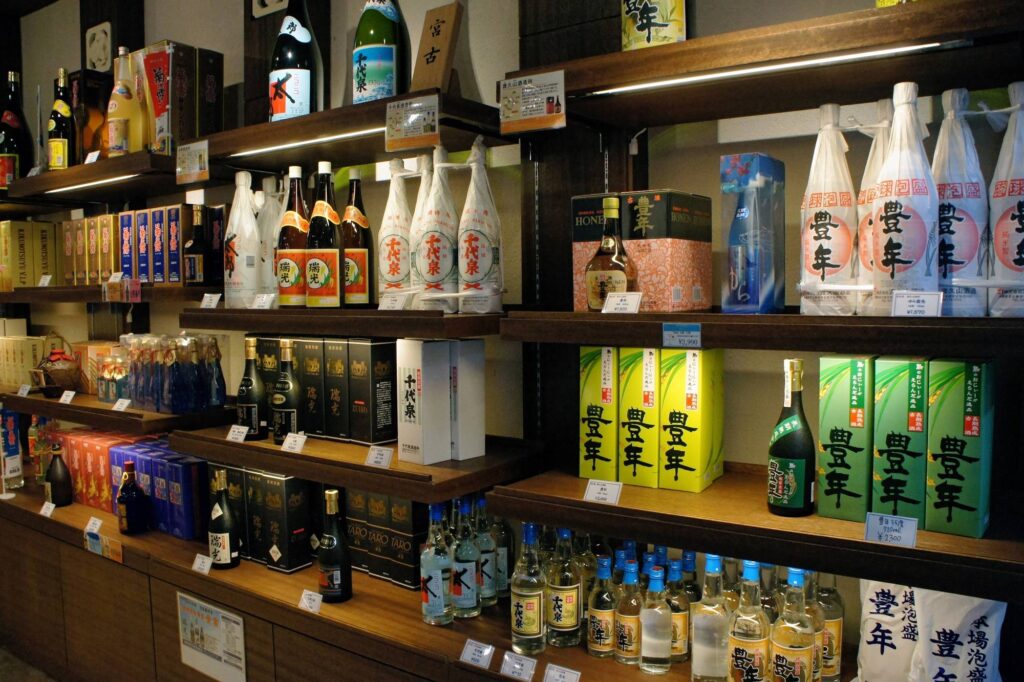
Okinawa’s signature spirit is awamori, distilled from Thai-style indica rice using black koji mold. Distilling is thought to have arrived through trade with Siam (Thailand) in the 15th century. Awamori is often enjoyed with water and ice, or mixed with shikuwasa juice.
Aged awamori is called kusu. To be labeled kusu, it must be aged for at least three years. Many distilleries welcome visitors, though tours and tastings vary, so check before you go. Drink responsibly: awamori is typically stronger than wine or sake.
Orion Beer
Orion is Okinawa’s own beer, brewed in Nago and found everywhere from convenience stores to beach bars. Its light, crisp lager is made for hot days. The Orion Happy Park brewery tour in Nago requires a reservation and is guided in Japanese. See northern Okinawa.
Soft Drinks and Tea
Try sanpin-cha, jasmine tea, which is Okinawa’s everyday tea, as well as shikuwasa juice and the root beer served at the A&W restaurants that remain from the American era.
Where to Eat
Shokudo (Local Diners)
Casual, family-run restaurants serving set meals, soba, and champuru at reasonable prices. Menus may be in Japanese only, but many have picture menus or plastic food displays.
Soba Shops
Many Okinawa soba shops specialize in just a few bowls. You often order and pay at a ticket machine near the entrance. Motobu, in the north, is known for its many long-running soba shops.
Markets
At Makishi Public Market in Naha, buy fish downstairs and have it cooked upstairs for a fee. Ishigaki and other islands have their own public markets. See Naha.
Izakaya and Min’yo Bars
Izakaya are relaxed pubs serving small plates to share with drinks. In Okinawa, some also host live folk music, where performers play the sanshin and the audience often joins in with dancing. See music and performing arts.
American-Style Diners and Cafés
In Chatan, Koza, and other areas near the bases, you’ll find burgers, steak houses, and taco rice. Okinawa also has a big café culture, with sea-view cafés in the south and on Kouri Island. See central Okinawa and southern Okinawa.
Regional Specialties
- Ishigaki: Ishigaki beef and Yaeyama soba. See Ishigaki.
- Miyako: Miyako soba and summer mangoes. See Miyako Islands.
- Itoman and Ojima: fresh fish and fish tempura.
- Motobu: Okinawa soba.
Cooking Classes and Food Experiences
To go deeper, look for Okinawan cooking classes in Naha, where you can learn to make champuru, soba, or sata andagi, or join a market tour with a local guide. Some awamori distilleries and pottery towns offer tastings and hands-on experiences too. They’re a great rainy-day activity and a way to bring a little of Okinawa home.
Dietary Tips
Vegetarian and Vegan
Okinawan cooking relies heavily on pork, and broths are usually made with pork and bonito fish stock, even when a dish looks vegetable-based. Champuru often contains pork or Spam. Naha and the resort areas have a growing number of vegetarian-friendly cafés. It helps to carry a card in Japanese explaining your diet. Supermarkets sell tofu, fruit, sweet potatoes, and onigiri for self-catering, but check the ingredients.
Halal
Halal options are limited but growing in Naha. Many dishes contain pork or pork-based broth, and awamori is used in cooking. Ask restaurants directly, and look for seafood or vegetable dishes prepared without pork stock.
Allergies and Gluten-Free
Soy, wheat, fish, and shellfish are common ingredients. Soba noodles in Okinawa are made from wheat, and soy sauce contains wheat. Carry a written card in Japanese that explains your allergy clearly, and ask before ordering.
Food Etiquette
- Say itadakimasu before eating and gochisosama afterward.
- Slurping noodles is normal.
- Don’t stick chopsticks upright in rice or pass food chopstick to chopstick.
- Tipping is not customary.
- Many small places are cash-only. See budget and costs.
Frequently Asked Questions
What is the most famous Okinawan food?
Okinawa soba is the everyday favorite, followed closely by goya champuru and rafute.
Is Okinawan food spicy?
Not usually. Add heat with koregusu, chili steeped in awamori, at the table.
Is awamori the same as sake?
No. Sake is brewed, while awamori is distilled from rice using black koji. It is generally much stronger.
Where can I try Okinawan food in Naha?
Makishi Public Market, the side streets around Kokusai Street, and local shokudo and izakaya throughout the city.
Is it easy to eat vegetarian in Okinawa?
It takes some effort, as pork and fish stock are common, but options are growing in Naha and tourist areas.