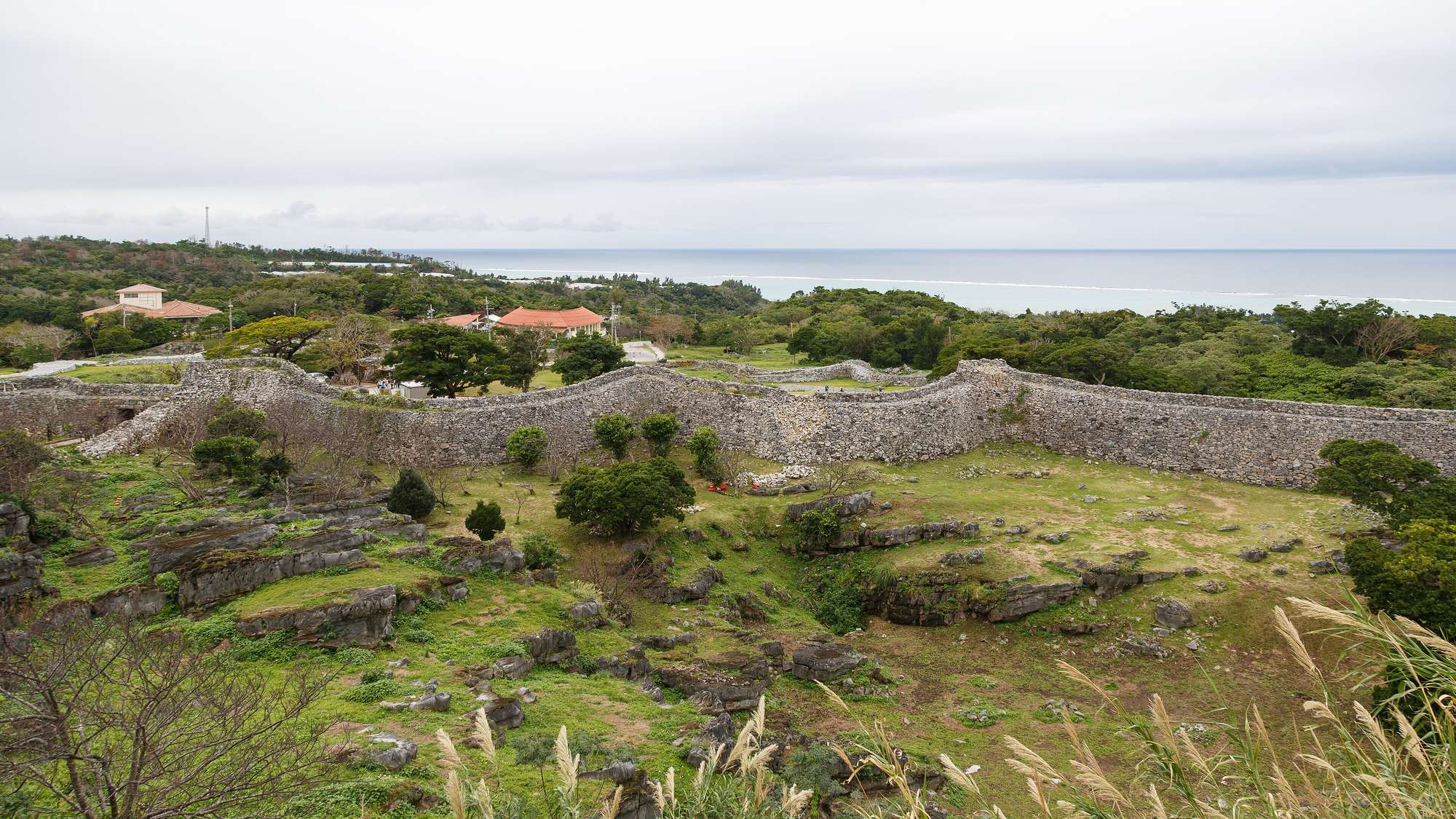
Long before Okinawa became part of Japan, the islands were ruled by local lords and then by the kings of the Ryukyu Kingdom. They left behind a remarkable legacy: hilltop fortresses called gusuku, royal tombs, gardens, and sacred sites, many with graceful, curving limestone walls unlike any castles in mainland Japan.
This guide to Okinawa castles and historic sites explains what a gusuku is, introduces the UNESCO World Heritage sites, and suggests how to fit them into your trip.
What Is a Gusuku?
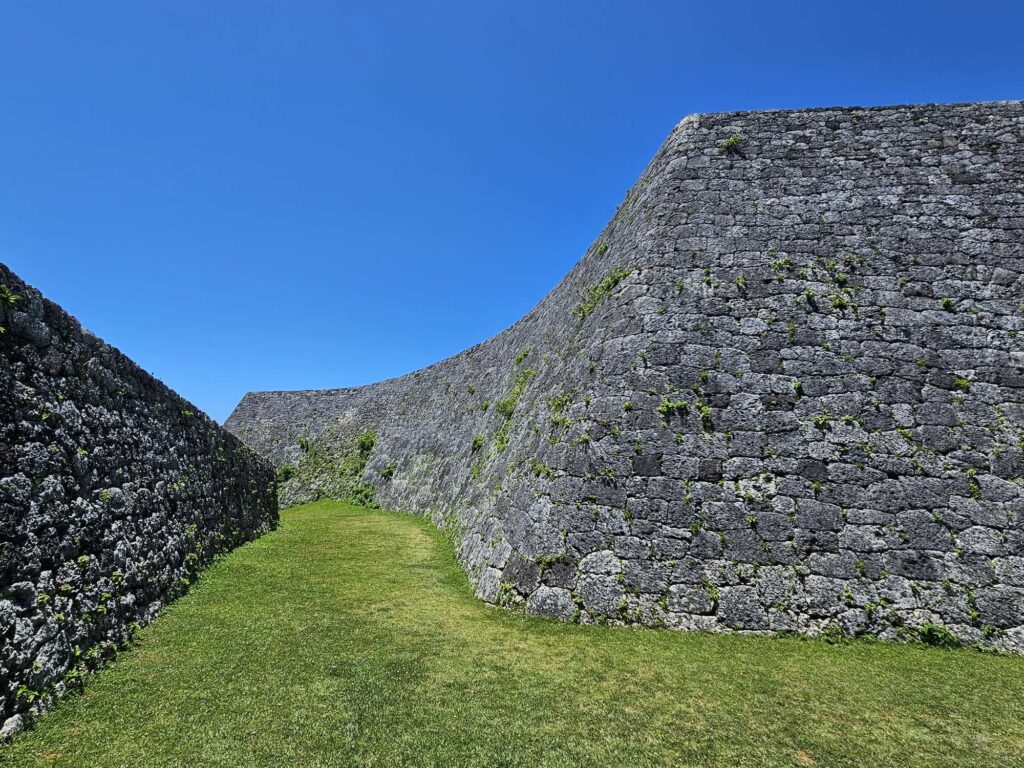
A gusuku is a fortified site, usually built on high ground, with walls of stacked coral limestone. Many date from roughly the 12th to 15th centuries, when rival lords controlled different parts of the island. By the 14th century, Okinawa was divided into three kingdoms: Hokuzan in the north, Chuzan in the center, and Nanzan in the south. In 1429, Sho Hashi of Chuzan unified them, founding the Ryukyu Kingdom.
Gusuku were more than military strongholds. Most contained sacred spaces, and many are still places of prayer today. Their walls follow the shape of the land in sweeping curves, and the views from the top are often spectacular.
The UNESCO World Heritage Sites
In 2000, nine sites were inscribed together on the UNESCO World Heritage List as the Gusuku Sites and Related Properties of the Kingdom of Ryukyu:
| Site | Location | What it is |
|---|---|---|
| Shuri Castle site | Naha | Royal castle and seat of the Ryukyu Kingdom |
| Tamaudun | Naha | Royal mausoleum |
| Sonohyan-utaki Ishimon | Naha | Stone gate of a royal sacred site |
| Shikinaen | Naha | Royal garden villa |
| Nakijin Castle site | Nakijin | Castle of the Hokuzan kingdom |
| Zakimi Castle site | Yomitan | Castle built by the lord Gosamaru |
| Katsuren Castle site | Uruma | Castle of the lord Amawari |
| Nakagusuku Castle site | Kitanakagusuku and Nakagusuku | Castle with outstanding stonework |
| Sefa-utaki | Nanjo | The kingdom’s most sacred site |
Note that the World Heritage listing covers the historic remains, such as walls and foundations. Many buildings you see today, including Shuri Castle’s halls, are modern reconstructions.
Shuri Castle
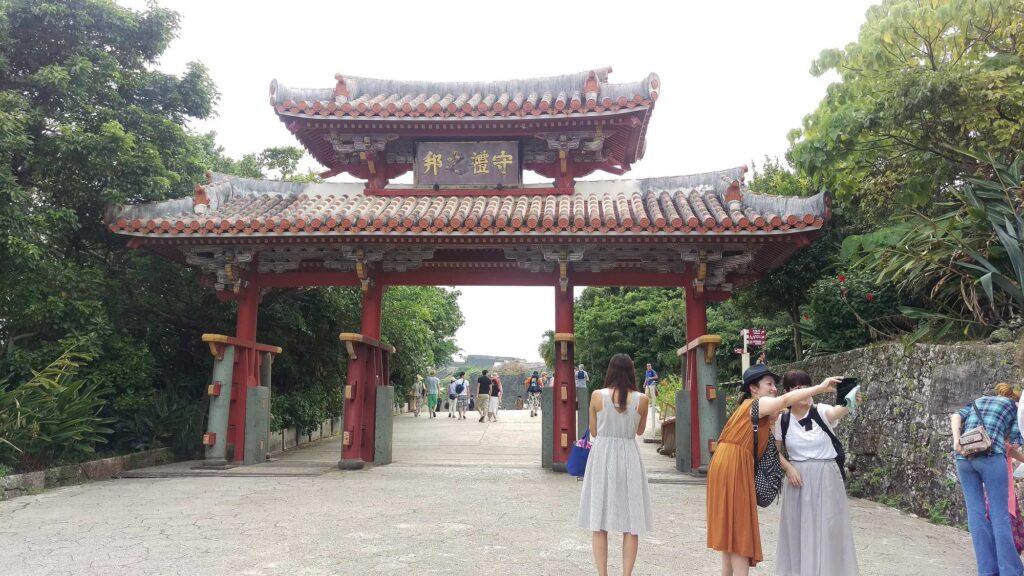
Shuri Castle was the royal palace and political center of the Ryukyu Kingdom from the 15th century until 1879. Destroyed in the Battle of Okinawa in 1945, it was rebuilt from 1992, then badly damaged by fire in 2019. The reconstructed main hall (Seiden) is due to open to the public on November 23, 2026, with timed advance reservations required to see the interior.
Don’t miss the Shureimon gate, the castle’s best-known symbol, and the Sonohyan-utaki stone gate nearby. Allow time to walk the stone-paved lanes of the Shuri neighborhood, including the Kinjo-cho stone path, which winds downhill past old walls and gardens.
Tamaudun and Shikinaen
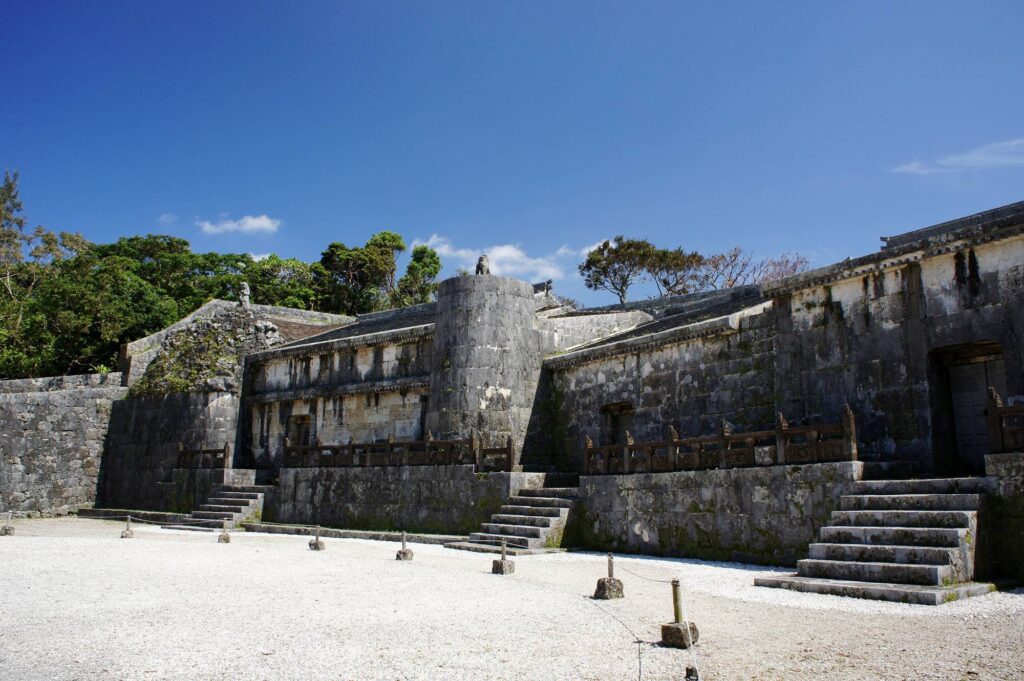
Close to Shuri Castle, Tamaudun is the mausoleum of the Second Sho Dynasty, built in 1501 by King Sho Shin. Its stone tomb chambers, guarded by carved lions, are a powerful reminder of the importance of ancestors in Ryukyuan culture.
Shikinaen, a short drive south, is the royal family’s former garden villa, completed in 1799 and used to entertain envoys from China. Its pond, stone bridges, and red-tiled pavilion combine Ryukyuan, Chinese, and Japanese styles. It’s a peaceful escape from the city.
Nakijin Castle
On the Motobu Peninsula, Nakijin Castle was the stronghold of the Hokuzan kings until it fell to Chuzan forces in 1416. Its long, snaking walls are among the most impressive in Okinawa, with views to the East China Sea. In late January and February, the castle is famous for its early-blooming cherry blossoms, and evening light-ups are sometimes held during the blossom season.
Zakimi Castle
In Yomitan, Zakimi Castle was built in the early 15th century by Gosamaru, a lord famed as a castle builder. It’s compact and quiet, with elegant curving walls and arched stone gateways that are considered some of the oldest in Okinawa. It makes a good stop on the way to or from the west coast resorts.
Katsuren Castle
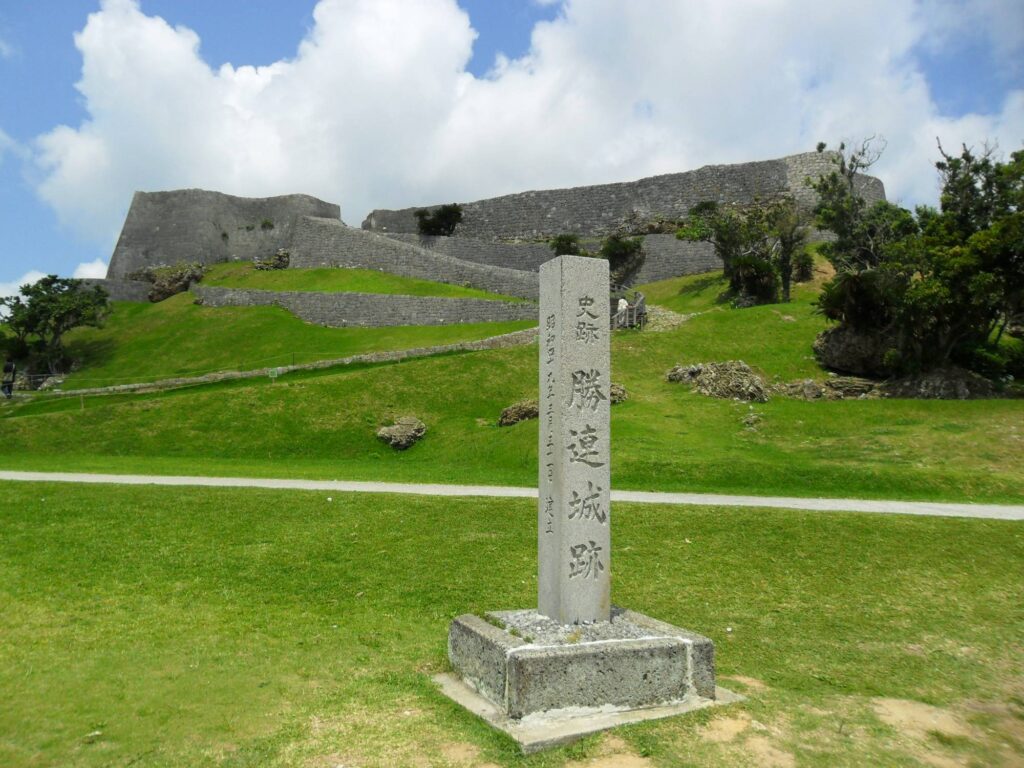
On a ridge in Uruma, Katsuren Castle was the seat of Lord Amawari, an ambitious ruler who was defeated in 1458. Climb its stepped terraces for sweeping views across the sea and the Katsuren Peninsula. Excavations here have uncovered trade goods from China and beyond, showing how connected Ryukyu was to the wider world.
Nakagusuku Castle
Nakagusuku Castle, between Kitanakagusuku and Nakagusuku villages, is often considered the finest example of gusuku stonework. Gosamaru later moved here from Zakimi and strengthened its walls. Members of Commodore Perry’s expedition, which visited Okinawa in 1853, admired its masonry. It’s spacious and less crowded than Shuri, with great views on clear days.
Sefa-utaki
The ninth World Heritage site isn’t a castle at all. Sefa-utaki in Nanjo was the most sacred place of the Ryukyu Kingdom, where the chief priestess was inaugurated. Read more in our guide to Ryukyuan religion and spirituality.
Other Historic Places Worth Visiting
- Tsuboya Pottery Street (Naha): a historic pottery district where kilns were brought together in 1682. Browse workshops and the pottery museum.
- Tamagusuku and Itokazu castle ruins (Nanjo): quieter southern gusuku with sea views. Tamagusuku is known for its round stone gateway.
- Okinawa Prefectural Museum (Naha): the best introduction to Okinawa’s history, from prehistory to the present.
- WWII sites in the south: including Peace Memorial Park and the Former Japanese Navy Underground Headquarters. See our guide to the Battle of Okinawa.
Suggested Routes
Half a day in Naha: start at Shuri Castle in the morning, walk down the Kinjo-cho stone path, visit Tamaudun, and finish with a quiet hour at Shikinaen.
A day in central Okinawa: by car, visit Zakimi Castle in Yomitan, Nakagusuku Castle, and Katsuren Castle in Uruma. Continue across the sea road to the islands beyond the Katsuren Peninsula if you have time.
The north: combine Nakijin Castle with the Okinawa Churaumi Aquarium and Kouri Island for a full day on the Motobu Peninsula.
Tips for Visiting
- Wear good shoes. Stone paths and steps can be steep and slippery, especially after rain.
- Go early or late. Castle sites have little shade, and midday summer heat is intense.
- Respect prayer sites. Many gusuku contain utaki, small sacred spots marked by incense burners. Don’t touch offerings or step into marked areas.
- Don’t climb the walls. They are fragile historic structures.
- Check opening information. Hours, admission, and reservation rules vary by site and season, particularly at Shuri Castle.
- Combine sites by area. Shuri, Tamaudun, and Shikinaen are all in Naha; Zakimi, Nakagusuku, and Katsuren are in central Okinawa; Nakijin pairs well with the Churaumi Aquarium.
Frequently Asked Questions
What is the most famous castle in Okinawa?
Shuri Castle in Naha, the former royal palace of the Ryukyu Kingdom. Its reconstructed main hall is due to reopen to the public on November 23, 2026.
How many UNESCO World Heritage sites does Okinawa have?
Nine sites make up the Gusuku Sites and Related Properties of the Kingdom of Ryukyu, inscribed in 2000. The north of the Main Island and Iriomote are also part of a separate natural World Heritage site, inscribed in 2021.
Are Okinawa’s castles original?
The walls and foundations at sites such as Nakijin, Zakimi, Katsuren, and Nakagusuku are historic, with restoration in places. The buildings at Shuri Castle are modern reconstructions.
Which castle ruins are best for views?
Katsuren and Nakagusuku have outstanding sea views, and Nakijin is beautiful in cherry blossom season.
Can I visit all the castles in one day?
The central castles can be combined in a day by car, but Nakijin is in the north and Shuri in Naha. Two days is more relaxed.