The Battle of Okinawa was one of the largest and deadliest battles of the Pacific War, and the only major land battle fought on Japanese soil where a large civilian population lived. In the spring of 1945, the islands that had once been the peaceful Ryukyu Kingdom became a battlefield, and the losses touched almost every Okinawan family.
Today, the memorials and museums of southern Okinawa ask visitors to remember the dead and reflect on the value of peace. This guide gives a brief, factual overview of the battle and explains how to visit its key sites with respect.
A Brief History of the Battle
Before the battle
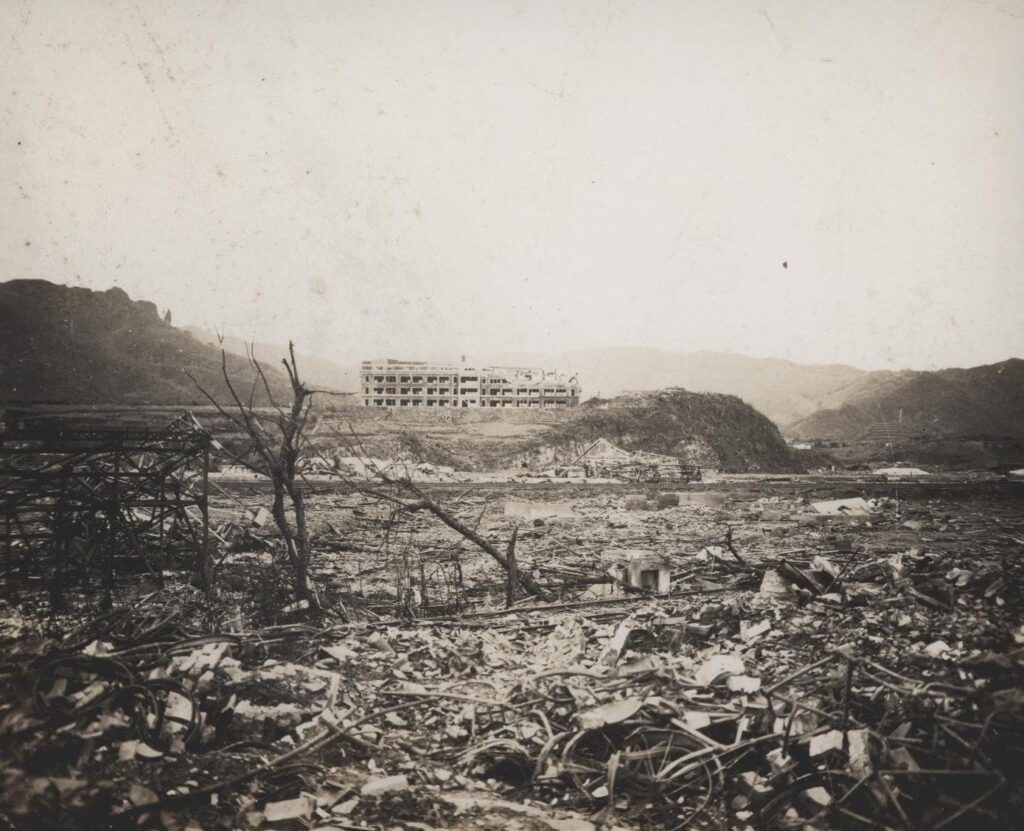
By early 1945, the United States planned to take Okinawa as a base for a possible invasion of mainland Japan. Japan’s 32nd Army, commanded by Lieutenant General Mitsuru Ushijima, was ordered to defend the island. Its strategy was a war of attrition, designed to hold out as long as possible and delay an attack on the mainland.
Okinawan civilians were mobilized on a huge scale. Men were drafted into the army and home guard units, and teenage students, both boys and girls, were sent to serve as messengers, laborers, and nursing aides.
March–April 1945: The landings
US forces began landing in the Kerama Islands on March 26, 1945. On April 1, the main invasion force came ashore on the Hagushi beaches on the Main Island’s west coast. The Japanese army had chosen not to defend the beaches, and instead concentrated its forces in fortified lines in the south.
In the Kerama Islands and elsewhere, many civilians died in so-called “group suicides,” which Okinawans today often describe as forced or compulsory group deaths, because of the pressure and fear created by the Japanese military.
April–May: The Shuri Line
The fiercest fighting took place along the Japanese defensive lines around Shuri, where the 32nd Army had dug its headquarters in tunnels beneath Shuri Castle. Battles at places such as Kakazu Ridge, Sugar Loaf Hill, and Maeda Escarpment were among the bloodiest of the war. At sea, waves of kamikaze attacks struck the US fleet, and the Japanese battleship Yamato was sunk on its way to Okinawa on April 7.
At the end of May, Japanese forces withdrew from Shuri to the southern tip of the island. Shuri Castle and much of the old capital were destroyed.
June: The end of organized fighting
The retreat south took the fighting into areas where tens of thousands of civilians had taken shelter in caves and villages. Caught between the two armies, they suffered terribly. In June, the US commander, Lieutenant General Simon Bolivar Buckner Jr., was killed in action, and around June 22–23 General Ushijima and his chief of staff took their own lives at Mabuni. June 23 is now remembered in Okinawa as the end of organized fighting.
The human cost
Exact numbers will never be known, but Okinawa Prefecture’s long-standing estimate puts the total death toll at more than 200,000 people:
| Group | Estimated deaths |
|---|---|
| Okinawan civilians | About 94,000 (estimate) |
| Okinawan-born military personnel and civilian auxiliaries | 28,228 |
| Japanese soldiers from other prefectures | 65,908 |
| US forces | 12,520 |
| Total | 200,656 |
Many researchers believe the true civilian toll was higher. Deaths continued after the battle, too, from disease, malnutrition, and malaria in internment camps and on the outer islands.
After the war
Okinawa remained under US administration until it was returned to Japan in 1972. A large US military presence has remained ever since, and the war and its legacy are still an important part of local life and politics.
The Himeyuri Students
Late on March 23, 1945, 222 students and 18 teachers from the Okinawa Women’s Normal School and the Okinawa First Prefectural Girls’ High School were mobilized as nursing aides to the Okinawa Army Hospital in Haebaru. The two schools’ nickname, Himeyuri, later gave the group its name.
The students worked in cave hospitals in appalling conditions, caring for the wounded, carrying water and food under fire, and burying the dead. When the army hospital retreated south, and then on June 18 ordered the students to disband, they were left to fend for themselves on the battlefield. According to the Himeyuri Peace Museum, 136 of the 240 students and teachers mobilized died, most after the disbandment order. In total, 227 students and teachers of the two schools lost their lives in the battle.
Their story is told by the survivors themselves at the Himeyuri Peace Museum, built beside the cave where many of them died.
Key Sites to Visit
Most of the main memorials are in the south of the Main Island, within about an hour’s drive of Naha. A rental car or a guided tour is the easiest way to visit several in one day.
Okinawa Peace Memorial Park and the Cornerstone of Peace
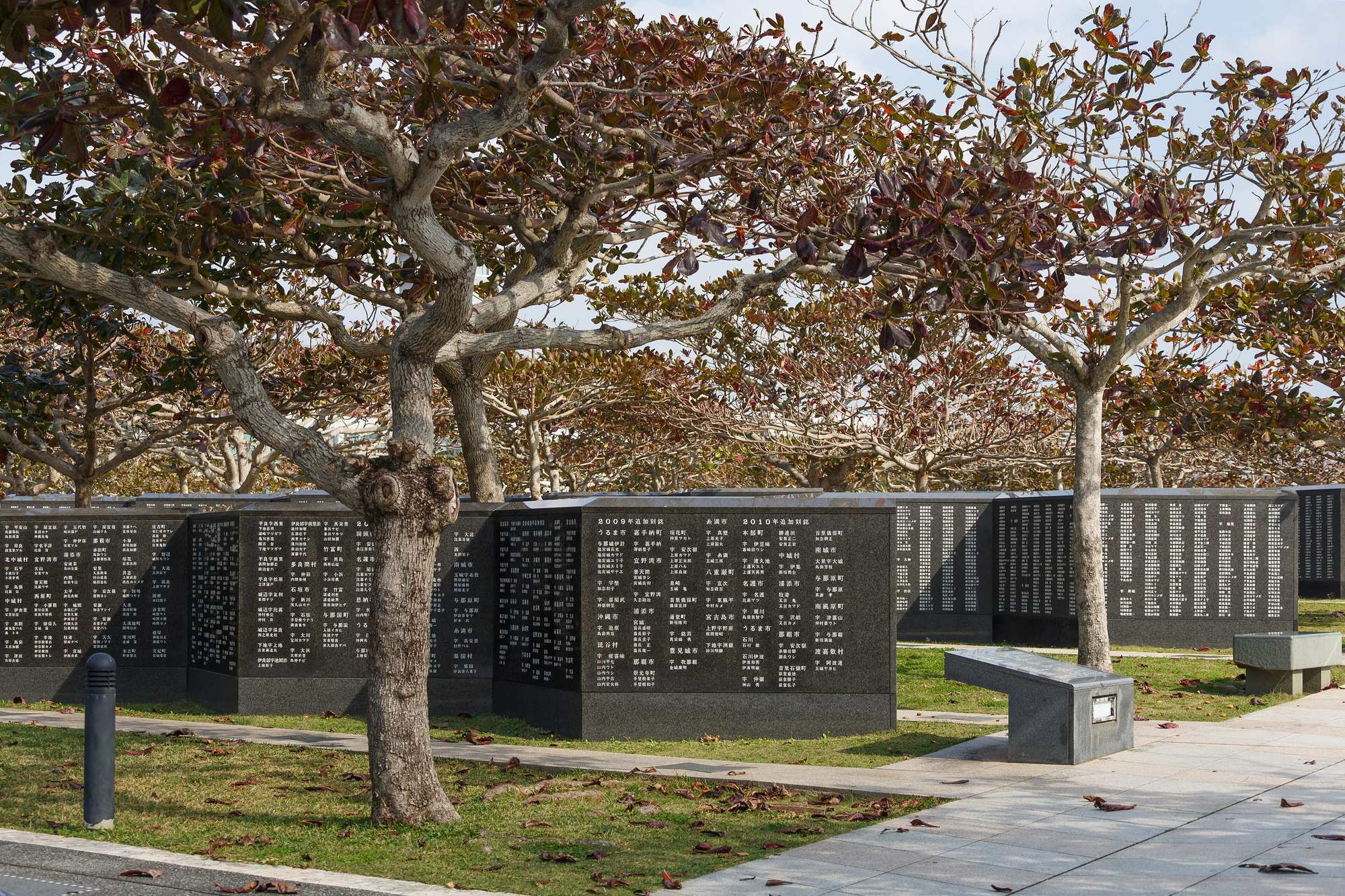
Located on the coast at Mabuni in Itoman, where the final fighting took place, Peace Memorial Park is the heart of Okinawa’s remembrance. Its centerpiece, the Cornerstone of Peace (Heiwa no Ishiji), was unveiled in 1995 on the 50th anniversary of the battle’s end. Rows of black stone walls are inscribed with the names of more than 240,000 people, regardless of nationality or whether they were soldiers or civilians. For Okinawans, the names include those who died in wartime elsewhere, from 1931 onward. New names are still added each year.
The park is also home to the Okinawa Prefectural Peace Memorial Museum, which tells the story of the battle with a strong focus on civilian experience and testimony, and the Peace Memorial Hall.
Himeyuri Peace Museum and Himeyuri Cenotaph
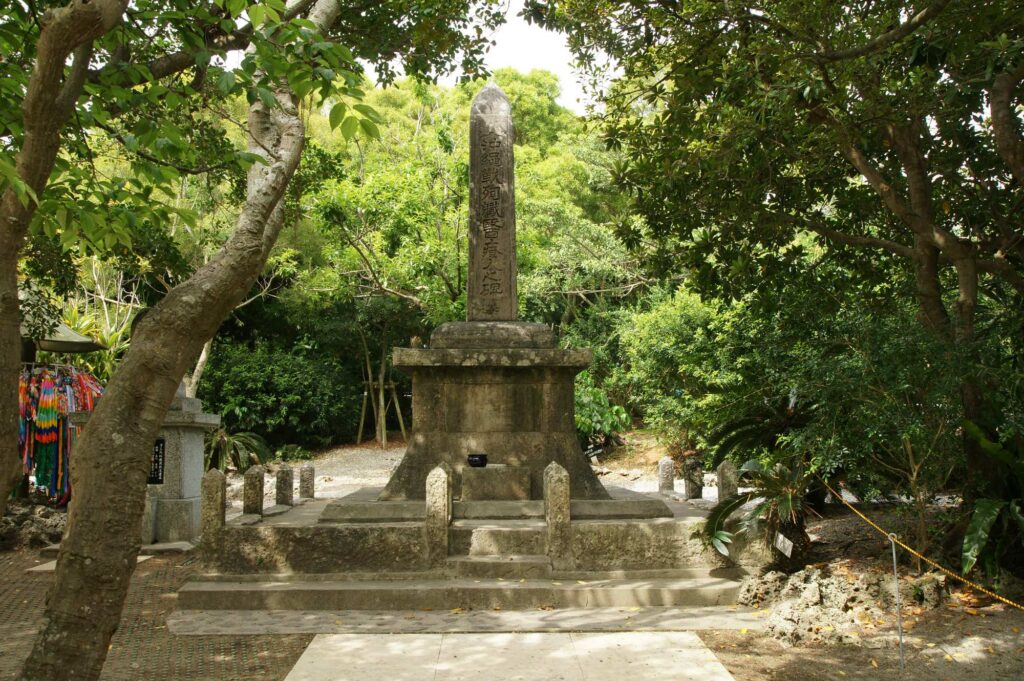
In Ihara, Itoman, the Himeyuri Peace Museum stands beside the Himeyuri Cenotaph (Himeyuri-no-To), built above the cave where many of the schools’ students and teachers died. Opened by Himeyuri survivors, the museum shares photographs, testimonies, and personal items, and a room where the portraits of those who died look out at visitors. It’s one of the most moving places in Okinawa. Allow time to read and absorb the exhibits.
Former Japanese Navy Underground Headquarters
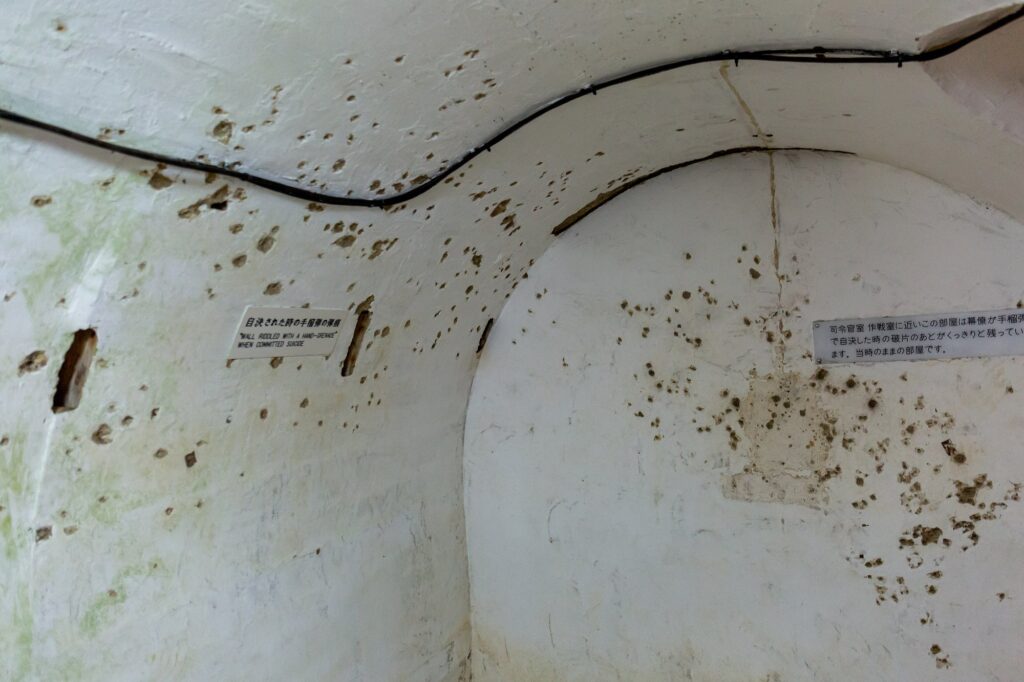
In Tomigusuku, close to Naha, you can walk through the tunnels dug by the Imperial Japanese Navy as its command post. The rooms still bear marks from the final days, when Rear Admiral Minoru Ota and members of his staff died there in mid-June 1945.
Shortly before his death, on June 6, Ota sent a now-famous telegram describing the suffering and sacrifice of the Okinawan people and asking that they be given special consideration in the future. The site has an exhibit about him and the telegram, and a hilltop park with views over Naha.
Kakazu Takadai Park (Kakazu Ridge)
In Ginowan, Kakazu Takadai Park marks the site of one of the first major clashes on the Shuri Line in April 1945. Today it is a quiet hilltop park with memorials, the remains of Japanese pillboxes, and an observation deck that looks out over central Okinawa, including US Marine Corps Air Station Futenma.
Shuri Castle area
Shuri Castle was the royal seat of the Ryukyu Kingdom for centuries. In 1945 the 32nd Army’s headquarters lay in tunnels beneath it, and the castle was destroyed in the fighting. It was rebuilt from 1992, damaged again by fire in 2019, and its reconstructed main hall (Seiden) is due to open to the public on November 23, 2026, with timed advance reservations required to see the interior.
As you walk the grounds and the old stone lanes of Shuri, it’s worth remembering how much of this was rebuilt from ruins. Check current information on access to the former headquarters tunnels before you visit.
Irei no Hi: Okinawa Memorial Day (June 23)
Every year on June 23, Okinawa observes Irei no Hi (Memorial Day), marking the end of organized fighting. It is a prefectural holiday, and a memorial ceremony for all the war dead is held at Peace Memorial Park, with a moment of silence at noon. Families visit the Cornerstone of Peace to find their relatives’ names, leave flowers and offerings, and pray.
Visitors are welcome to attend public memorial events, but this is a day of mourning. If you visit on or around June 23, expect crowds and road restrictions in the south, dress modestly, and keep your visit quiet and respectful.
Visiting Respectfully
- Treat memorials as places of mourning. Speak quietly and avoid loud conversations or phone calls.
- Follow the rules on photography, which is restricted in some museum exhibits. Never take photos of people praying or grieving.
- Don’t climb on monuments, lean on name walls, or touch offerings left by families.
- Dress modestly, even on hot days.
- Do not enter caves (gama) on your own. Some were sites of mass death and are treated as sacred; visit only with an authorized guide where tours are offered.
- If you’d like to leave flowers, do so quietly at the designated places.
- Take time to read survivors’ testimonies. They are the heart of these museums.
Visiting these sites can be emotionally intense. Many people plan a calmer afternoon afterward, such as a visit to the coast or Okinawa’s sacred sites in nearby Nanjo.
Frequently Asked Questions
When was the Battle of Okinawa?
US landings began in the Kerama Islands on March 26, 1945, and on the Main Island on April 1. Organized fighting ended around June 22–23, 1945, which is why June 23 is Okinawa’s Memorial Day.
How many people died in the Battle of Okinawa?
Okinawa Prefecture estimates more than 200,000 deaths, including about 94,000 Okinawan civilians, about 94,000 Japanese military personnel and auxiliaries, and 12,520 Americans. Many researchers believe the civilian toll was higher.
Who were the Himeyuri students?
They were students and teachers from two girls’ schools in Naha, mobilized as nursing aides for the Japanese army. Of the 240 mobilized, 136 died.
What is the Cornerstone of Peace?
A memorial in Peace Memorial Park, Itoman, inscribed with the names of more than 240,000 people who died, regardless of nationality or military or civilian status.
Can I visit WWII sites in Okinawa in one day?
Yes. Peace Memorial Park, the Himeyuri Peace Museum, and the Former Japanese Navy Underground Headquarters are all in the south and can be combined in a day by car, though it’s a lot to take in.
Is it appropriate for tourists to visit these memorials?
Yes. Okinawa’s memorials and museums were created so that people from around the world can learn about the battle and reflect on peace. Visit with respect, and you’ll be welcome.