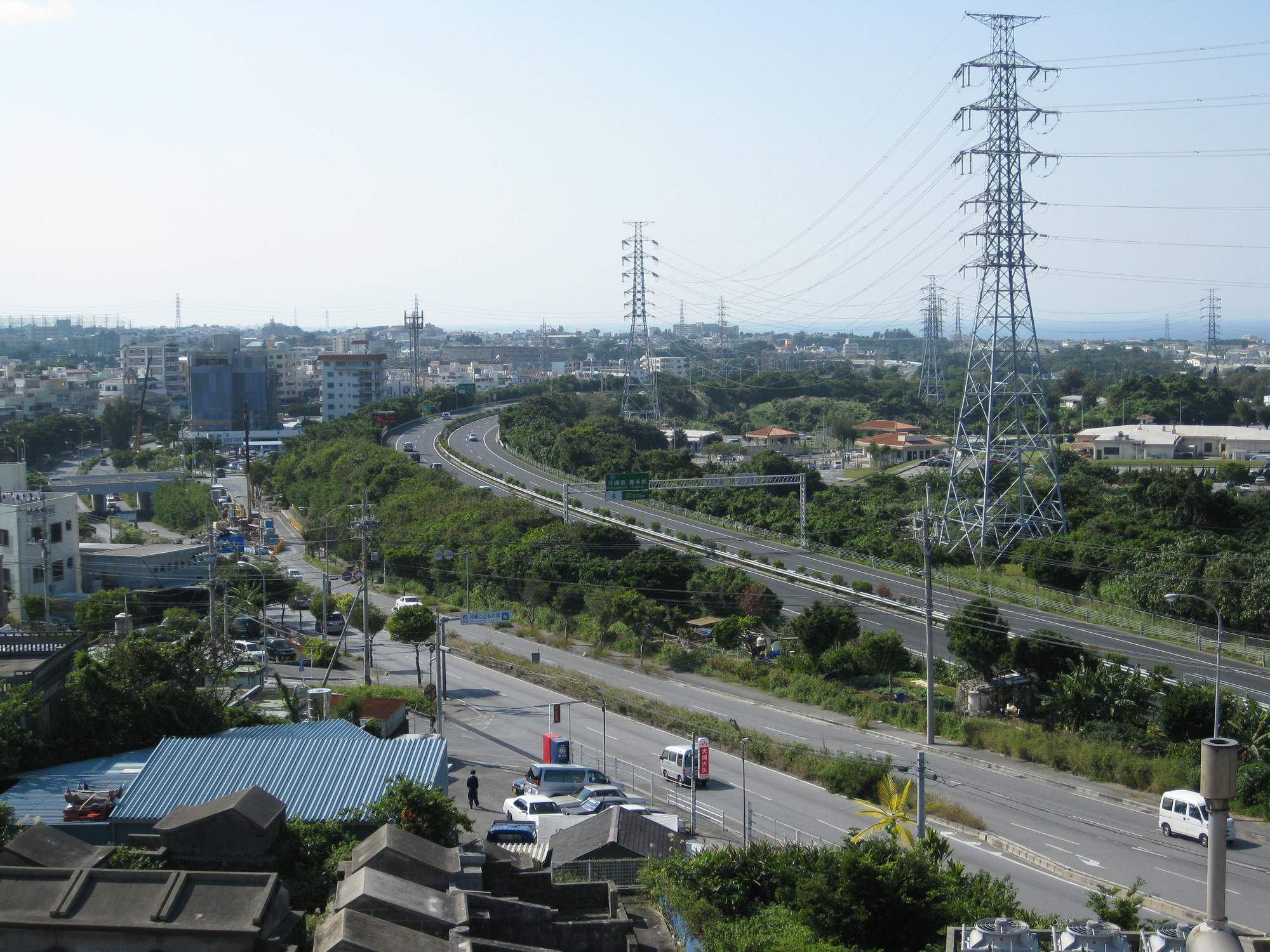
Okinawa doesn’t have the dense train network of Tokyo or Osaka. The Main Island has a single monorail line in Naha, and beyond the city most visitors rely on cars, buses, ferries, and short flights. The good news is that once you know your options, getting around Okinawa is straightforward.
This guide covers each way to travel, what you need to drive legally, and which option suits which kind of trip.
Rental Cars
For most visitors who want to explore beyond Naha, a rental car is the most flexible choice. Many beaches, viewpoints, and northern sights are hard to reach by public transport, and on Miyako and Ishigaki a car is close to essential.
Driving permit requirements
To drive in Japan with a foreign license, you need one of the following, together with your original license and passport:
- An International Driving Permit (IDP) issued under the 1949 Geneva Convention. Japan does not accept IDPs issued under other conventions. Get your IDP in the country that issued your license, before you travel.
- An official Japanese translation of your license if it was issued in Switzerland, Germany, France, Belgium, Monaco, or Taiwan. These licenses use a translation instead of an IDP, available from the Japan Automobile Federation (JAF) or certain embassies.
In general, you can drive on an IDP or translation for up to one year from your date of entry into Japan. Rental companies will check your documents carefully and cannot rent you a car without them. Rules can change, so confirm the latest requirements with JAF or your rental company before you leave home.
Rules of the road
- Japan drives on the left, and rental cars are right-hand drive.
- Japan has a zero-tolerance approach to drink-driving. Do not drive after any alcohol.
- Children under 6 must ride in a child seat. Rental companies can provide them if you request one when booking.
- Stop signs in Japan are red inverted triangles marked 止まれ (tomare). Always come to a full stop.
- Using a handheld phone while driving is illegal and strictly enforced.
Expressway and ETC
The Okinawa Expressway runs about 57 km (35 mi) from Naha to Kyoda in Nago, cutting travel times between the south and the north of the island. It is a toll road. You can pay cash at the toll booths, or rent an ETC card (electronic toll collection) from your rental company to drive through the ETC lanes without stopping.
Traffic in Naha
Naha and the surrounding central area are busy, and Route 58, the main west-coast road, can be slow at rush hour and on weekends. Some major roads have bus-only lanes during weekday rush hours, so watch for signs and painted lanes. Allow extra time when heading to the airport, especially in the late afternoon.
Rental tips
- Book well ahead for Golden Week, summer, and other holidays, when cars can sell out.
- Most rental offices near Naha Airport are a short shuttle ride from the terminal, so allow time for pick-up and drop-off.
- Request an English-language navigation system. Many GPS units can search by phone number or by Mapcode, a numeric location code widely used in Okinawa.
- Consider full insurance cover, which rental companies offer as an add-on.
- Check where you’ll park. Many hotels in Naha charge for parking or have limited spaces.
Yui Rail Monorail
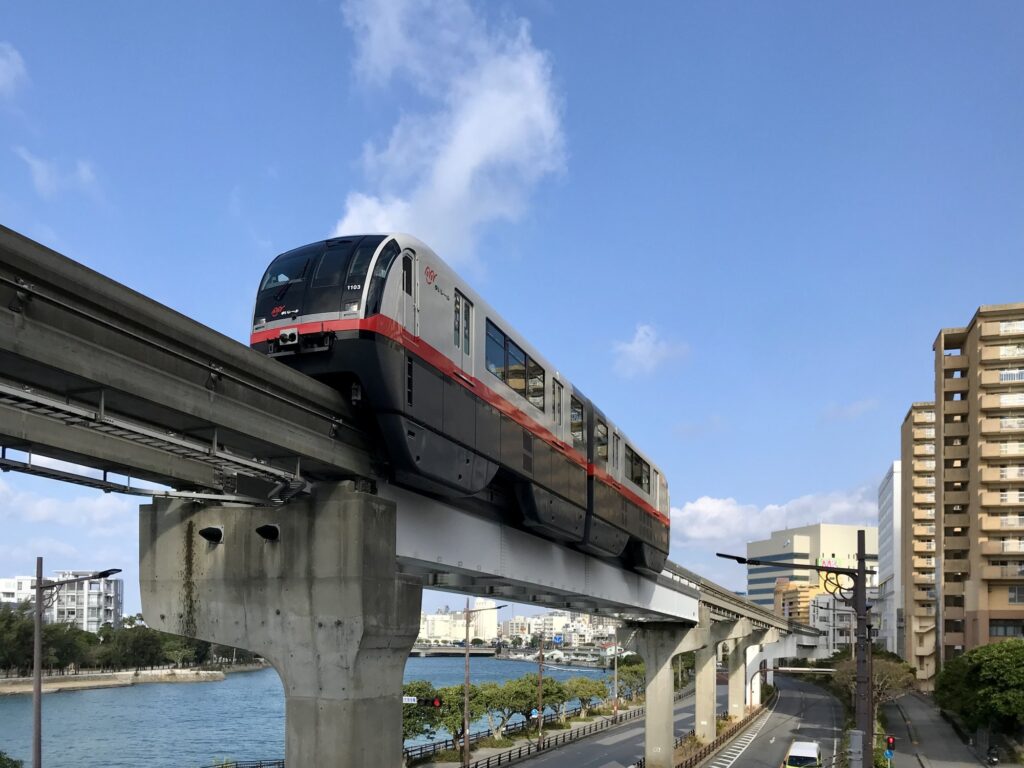
The Yui Rail monorail is the easiest way to get around Naha. It runs from Naha Airport through the city center to Shuri and on to Tedako-Uranishi in Urasoe, with 19 stations in total. Useful stops include Kenchomae and Makishi (for Kokusai Street), Omoromachi (shopping and the Okinawa Prefectural Museum), and Shuri (for Shuri Castle).
- Tickets: single-ride QR tickets from station machines.
- Passes: 1-day and 2-day passes, valid for 24 or 48 hours from purchase.
- IC cards: the local OKICA card, Suica, and other compatible Japanese transit IC cards, including mobile Suica.
- Contactless bank cards: tap-to-ride with major credit and debit cards is available at all stations.
Yui Rail is ideal if you are staying in Naha, but it does not go north to Chatan, Onna, or Motobu.
Buses
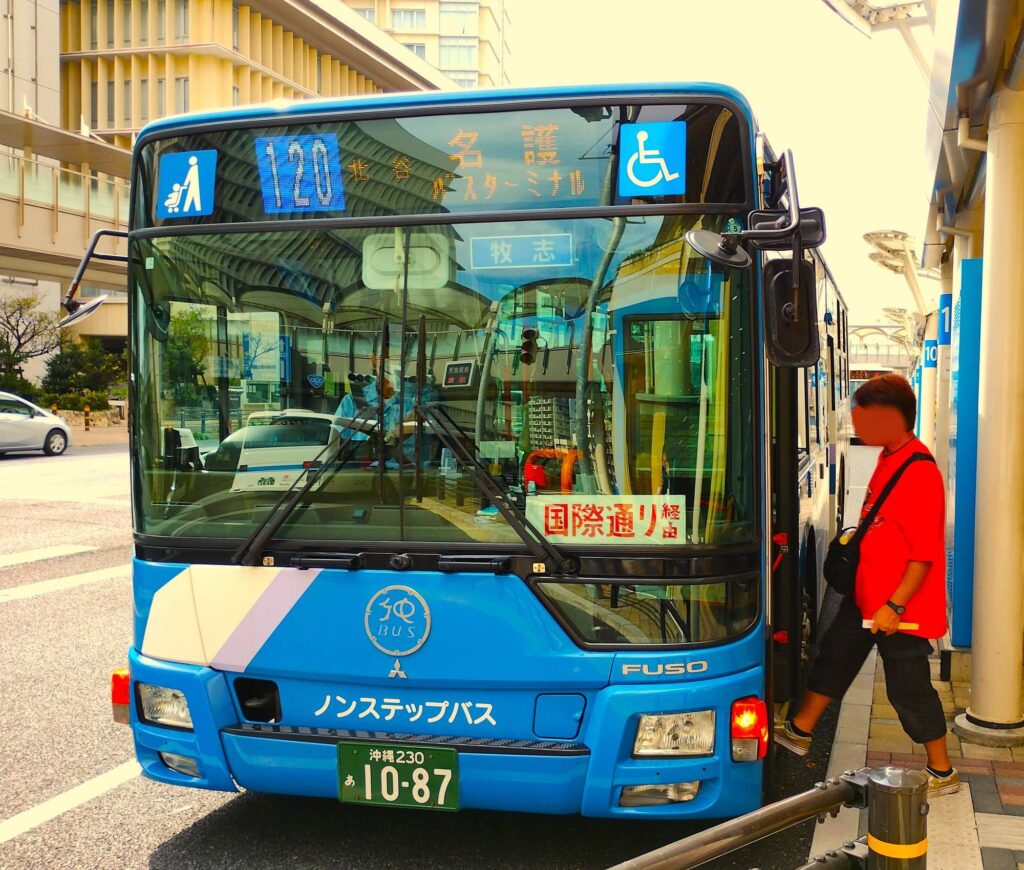
Okinawa’s route buses, operated mainly by Ryukyu Bus, Naha Bus, Okinawa Bus, and Toyo Bus, reach most towns on the Main Island. They are inexpensive but can be slow, especially in traffic, and services thin out in the north.
- Airport limousine buses link Naha Airport with major resort areas, including Chatan, Onna, and Nago. Tickets are bought in advance, not on board.
- Expressway buses run from Naha toward the north, including services to the Motobu Peninsula and the Churaumi Aquarium area.
- OKICA works on most route buses on the Main Island. Have some cash as a backup.
- Passes: the Okinawa Bus Pass offers unlimited rides on Main Island route buses for set periods, with a version that adds a Yui Rail day pass. It does not cover airport limousine buses or some express services. Within Naha, a one-day pass covers Naha Bus and Yui Rail.
Fares are usually based on distance. Follow the signs for which door to use; if you are not using an IC card, take a numbered ticket when you board and pay the fare shown on the display when you get off. Press the stop button before your stop.
Taxis
Taxis are plentiful in Naha and at the airport, and they are reasonably priced compared with mainland Japan’s big cities. You can hail them on the street or find them at taxi stands. The rear left door opens automatically, so let the driver handle it. Tipping is not expected.
Many taxi companies offer sightseeing charters by the hour, which can be good value for a small group. Outside the cities, taxis are scarcer, so ask your hotel to call one.
Ferries
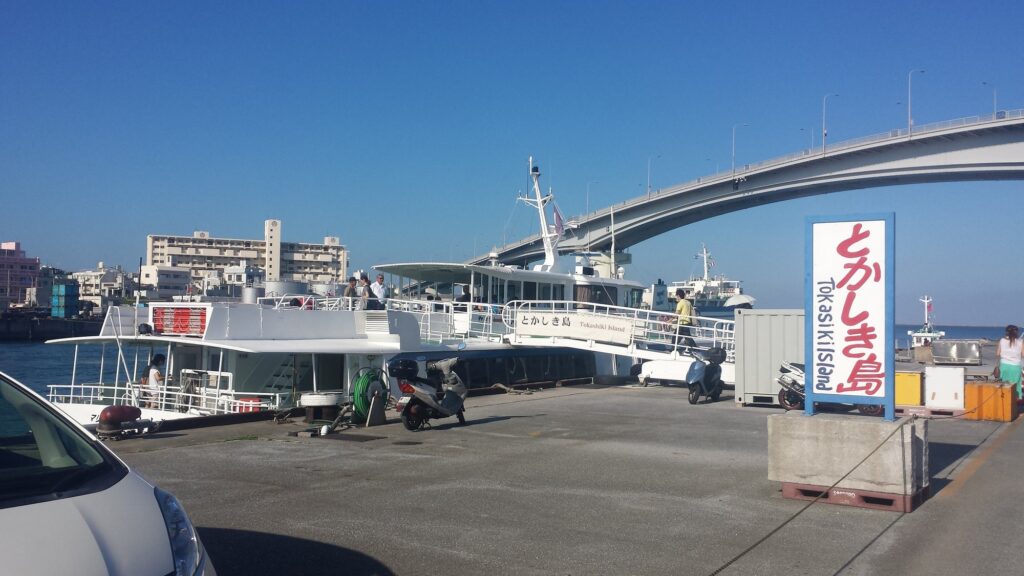
Ferries are the main way to reach the smaller islands. The most popular routes for visitors leave from Tomari Port in Naha for the Kerama Islands:
| Route | Boat type | Approximate time |
|---|---|---|
| Tomari Port – Tokashiki | High-speed boat | About 40 minutes |
| Tomari Port – Tokashiki | Car ferry | About 70 minutes |
| Tomari Port – Zamami / Aka | High-speed boat | About 50–70 minutes |
| Tomari Port – Zamami / Aka | Car ferry | About 90–120 minutes |
| Ishigaki Port – Taketomi | High-speed boat | About 15 minutes |
Other useful ferries include services from Azama Port in Nanjo to Kudaka Island, from Motobu Port to Ie Island, and from Ishigaki Port to the other Yaeyama Islands, such as Taketomi, Kohama, and Iriomote.
There is no regular passenger ferry between the Main Island and Miyako or Ishigaki, so you’ll need to fly. Book Kerama ferries ahead in summer, and expect cancellations in strong winds and typhoons.
Inter-Island Flights
Short flights connect Naha Airport with the outer islands. The flight to Miyako takes about 55 minutes, and the flight to Ishigaki about an hour. There are also flights to smaller islands such as Kumejima and Yonaguni, and direct flights from mainland Japan to Miyako and Ishigaki.
Inter-island routes are operated mainly by Japan Airlines group carriers, including Japan Transocean Air (JTA) and Ryukyu Air Commuter (RAC), and by ANA. Check baggage allowances if you’re carrying dive gear, and allow extra time in typhoon season.
Cycling
Cycling is a lovely way to explore small, flat islands. Renting a bicycle on Taketomi Island is a classic, and Kudaka Island is easy to circle by bike. On the Main Island, rental e-bikes are handy around Naha and coastal paths, though heat, hills, and traffic make longer rides challenging.
- Ride on the left side of the road, and only on the sidewalk where signs allow it.
- Japan enforces cycling rules, including bans on phone use and riding after drinking.
- Japanese law asks all cyclists to make an effort to wear a helmet, so use one if your rental shop offers it.
- Carry plenty of water and avoid riding in the midday heat in summer.
Which Option for Which Trip?
| Your trip | Best option | Notes |
|---|---|---|
| Staying in Naha, sightseeing in the city | Yui Rail, walking, taxis | No car needed; parking is limited and costly |
| Airport to a west coast resort | Airport limousine bus or rental car | Limousine buses link the airport with major resort areas |
| Exploring the whole Main Island | Rental car | Use the expressway for the north |
| Day trip to the Churaumi Aquarium without a car | Expressway bus or a tour | Allow a full day |
| Day trip to the Kerama Islands | Ferry from Tomari Port | Book ahead in summer |
| Miyako or Ishigaki | Flight from Naha, then rental car | Buses on these islands are limited |
| Taketomi or Iriomote | Ferry from Ishigaki Port | Rent a bike on Taketomi |
Sample Drive Times from Naha Airport
These are approximate and assume normal traffic. Allow more time at rush hour, on weekends, and in peak season.
| Destination | Distance | Approximate time |
|---|---|---|
| Okinawa Peace Memorial Park (Itoman) | About 20 km (12 mi) | About 45 minutes |
| Mihama American Village (Chatan) | About 20 km (12 mi) | About 35–45 minutes |
| Sefa-utaki (Nanjo) | About 30 km (19 mi) | About 50 minutes |
| Cape Manzamo (Onna) | About 50 km (31 mi) | About 55 minutes via expressway |
| Kouri Bridge (Nakijin) | About 85 km (53 mi) | About 1.5 hours via expressway |
| Okinawa Churaumi Aquarium (Motobu) | About 96 km (60 mi) | About 2 hours via expressway |
| Cape Hedo (Kunigami) | About 120 km (75 mi) | About 2.5 hours via expressway |
Planning your base? Our guide to where to stay in Okinawa compares the main areas, and the best time to visit explains how the seasons affect travel.
Frequently Asked Questions
Do I need a car in Okinawa?
Not if you are staying in Naha, where the monorail, buses, and taxis work well. To explore the rest of the Main Island, Miyako, or Ishigaki, a rental car is by far the easiest option.
Can I drive in Okinawa with my US or UK license?
Not on its own. You need an International Driving Permit issued under the 1949 Geneva Convention, obtained in your home country before you travel, plus your original license and passport.
Can I use Suica in Okinawa?
Yes, Suica and compatible IC cards work on the Yui Rail monorail. For route buses, the local OKICA card is the safest choice, and it’s wise to carry some cash.
Is there a train in Okinawa?
The only rail line is the Yui Rail monorail in Naha and neighboring Urasoe. There is no train to the north of the island.
How do I get to the Kerama Islands?
Take a high-speed boat or car ferry from Tomari Port in Naha to Zamami, Aka, or Tokashiki. Book ahead in summer, and check for weather cancellations.
How do I get from Naha to Ishigaki or Miyako?
Fly. Flights take around an hour, and there is no regular passenger ferry on these routes.