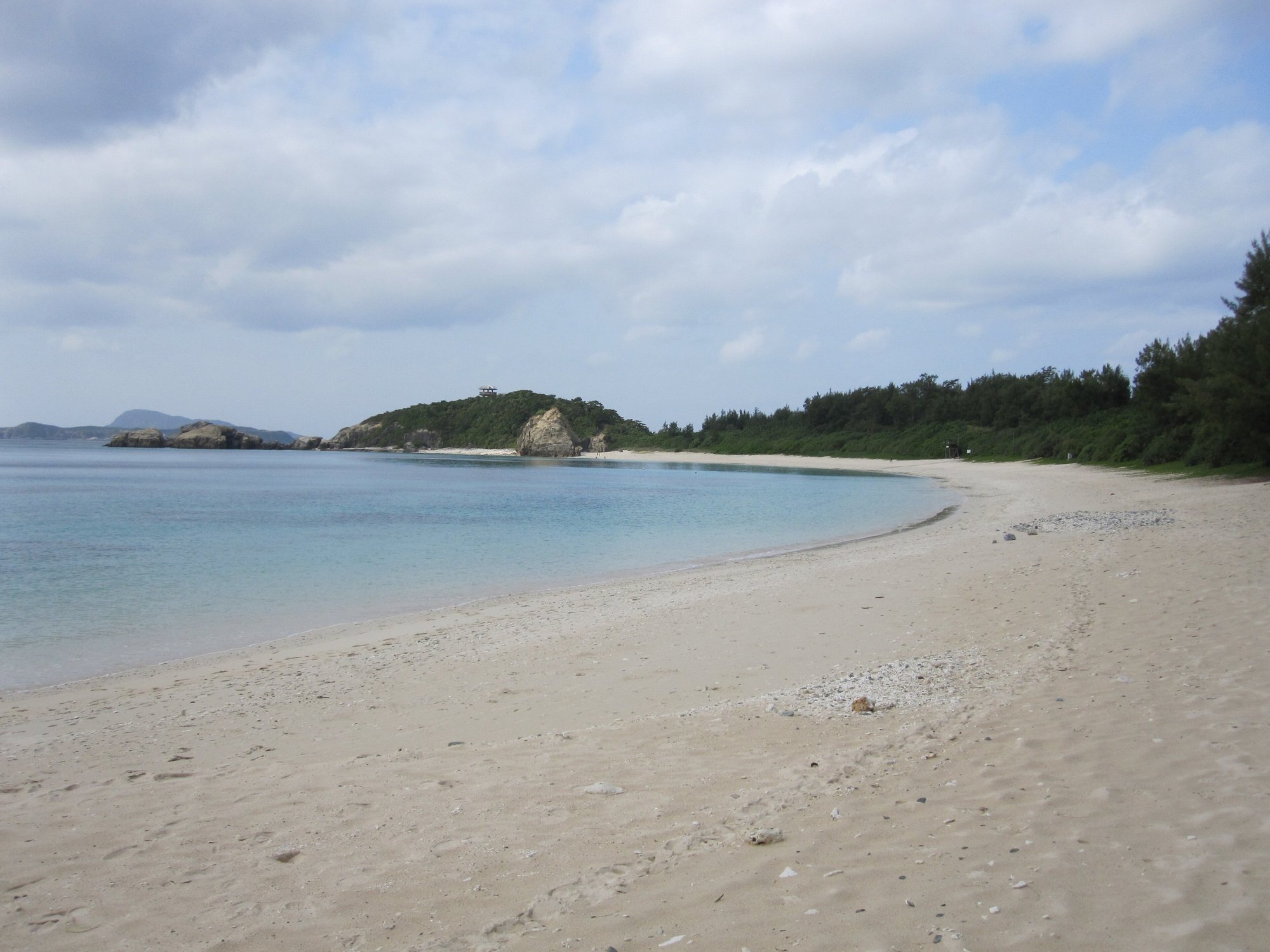
Okinawa is famous for clear turquoise water, white sand, and coral reefs, and with dozens of inhabited islands there is a beach for every kind of traveler. Some are lively resort beaches with lifeguards, showers, and jellyfish nets. Others are quiet, natural coves with no facilities at all.
This guide to the best beaches in Okinawa is grouped by area, so you can match beaches to where you are staying. You will also find advice on beach season, jellyfish nets, and how to stay safe in the water.
Before You Go: Managed vs. Natural Beaches
Okinawa’s beaches fall into two broad types, and knowing the difference will shape your day.
- Managed beaches have lifeguards during the swimming season, a marked swimming area, toilets, showers, and usually habu jellyfish nets in summer. Some charge for parking, showers, or equipment rental. These are the best choice for families and less confident swimmers.
- Natural beaches have no lifeguards or nets and often no facilities. They can be stunning, but you swim entirely at your own risk, and reef currents can be strong.
Okinawa Main Island Beaches
The Main Island is easy to explore by rental car, and many good beaches are within an hour or two of Naha.
South: Azama Sunsun Beach
In Nanjo City, Azama Sunsun Beach is a well-managed, family-friendly beach with calm water, lifeguards in season, and a netted swimming area. It sits beside Azama Port, where ferries leave for Kudaka Island, and is a short drive from the sacred site of Sefa-utaki, making it easy to combine culture and beach time in one day.
Nearby, Mibaru Beach is known for glass-bottom boat trips over the reef, a good option if you want to see marine life without swimming.
Central: Araha Beach and Sunset Beach
In Chatan, on the west coast north of Naha, Araha Beach and Sunset Beach are two of the most convenient city beaches on the island. Both are managed beaches with facilities and seasonal jellyfish nets.
Sunset Beach sits next to American Village, so you can swim in the afternoon, watch the sun go down over the East China Sea, and walk to dinner. Araha Beach is a little more relaxed, with a long seaside park, a promenade, and plenty of cafés nearby.
West Coast Resort Area: Onna and Manza
The coastline around Onna Village is lined with resort hotels and beaches, many of them managed by the hotels and open to the public, sometimes with fees for parking or facilities. The Manza area, near the famous Cape Manzamo cliffs, has resort beaches with clear water that are popular for snorkeling and water sports.
This coast is also a hub for snorkeling and diving tours, including trips to the Blue Cave at Cape Maeda. If you are staying in this area, you can enjoy a different beach every day.
North: Emerald Beach
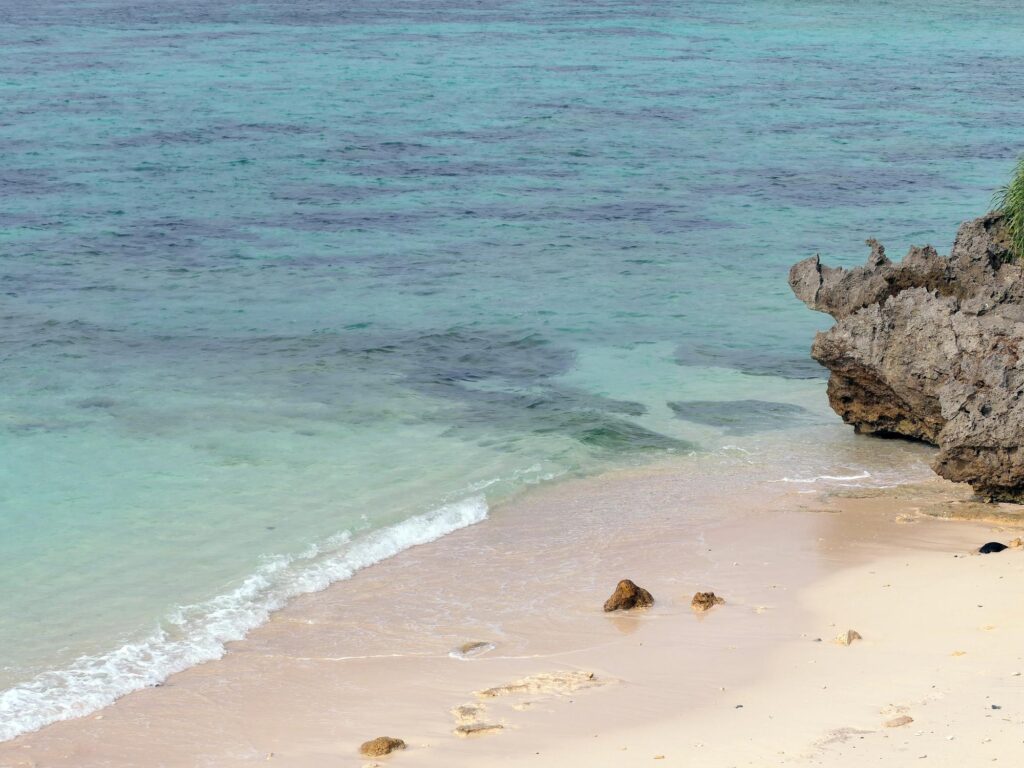
Inside Ocean Expo Park on the Motobu Peninsula, Emerald Beach is a beautifully maintained beach with white sand and clear, shallow water. It is a short walk from the Okinawa Churaumi Aquarium, which makes it an easy add-on for families. Swimming is allowed only in the designated area during the official season.
North: Kouri Island
Connected to the Main Island by the long Kouri Bridge via Yagaji Island, Kouri Island is famous for its turquoise water. The beach right by the bridge is one of the most photographed spots in Okinawa. On the island’s north coast, Tinu Beach is home to the heart-shaped “Heart Rock,” which is best enjoyed as a photo stop at low tide.
Kerama Islands
The Kerama Islands, a short ferry ride west of Naha from Tomari Port, are part of Keramashoto National Park. The water here is so clear that it has its own name: “Kerama blue.” Sea turtles are often seen near the shore, and from roughly January to March, humpback whales visit the surrounding waters.
Furuzamami Beach (Zamami Island)
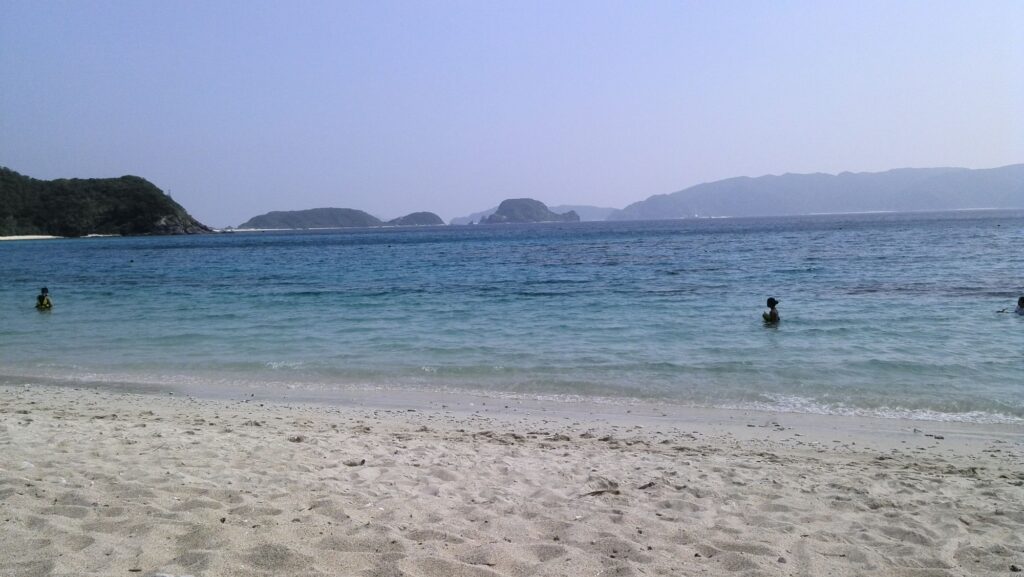
Furuzamami Beach is often ranked among the best beaches in Japan. It has soft white sand, excellent snorkeling just offshore, and lifeguards and facilities during the swimming season. It is an easy walk or short bus ride from Zamami Port.
Aharen Beach (Tokashiki Island)
Aharen Beach is a long, gently curving beach on Tokashiki Island with calm, shallow water and good snorkeling. It has shops, rental gear, and accommodation nearby, and is a great choice for a day trip or an overnight stay.
Tip: ferries to the Kerama Islands can sell out on busy days and are cancelled in rough weather, so book ahead and keep your plans flexible.
Miyako Islands
Miyako is known for some of the clearest water in Okinawa. Bridges connect the main island to Irabu, Ikema, and Kurima islands, making for easy beach-hopping by car.
Yonaha Maehama Beach
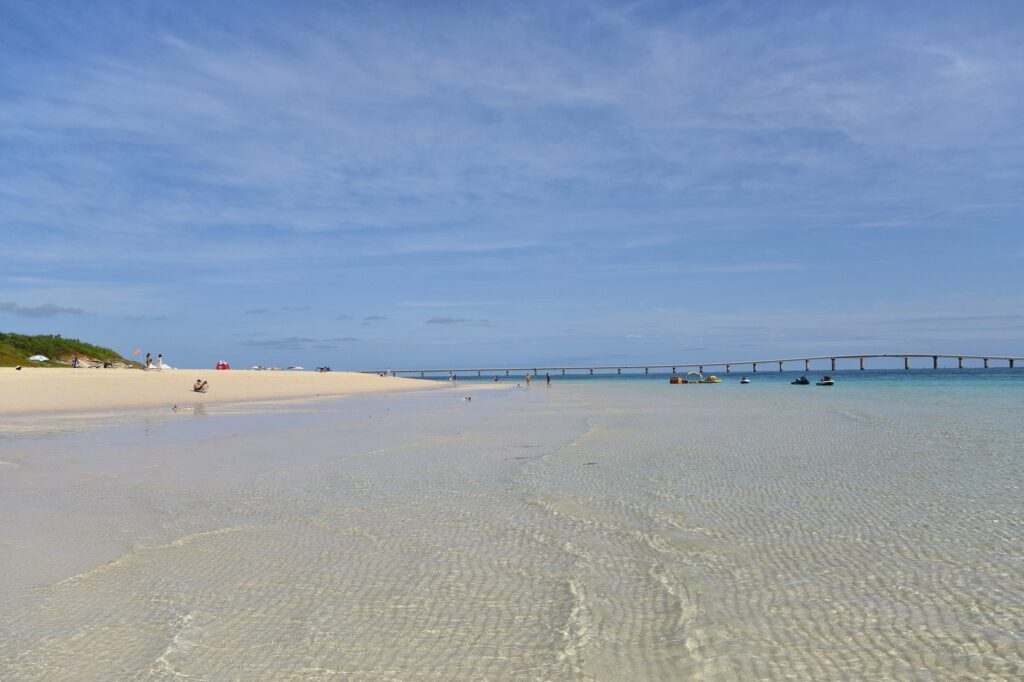
Stretching for about 7 km (4 mi) of fine white sand, Yonaha Maehama is often called one of the most beautiful beaches in Japan. The water is shallow and calm in good weather, and the beach has facilities and a netted swimming area in season. It looks out toward Kurima Island and its bridge.
Sunayama Beach
Sunayama Beach (“Sand Mountain Beach”) is reached by walking over a large sand dune, and its natural rock arch makes it one of Miyako’s most photographed spots. It is not a managed swimming beach: there are no lifeguards or jellyfish nets, and currents can be strong. Enjoy it for the views, and swim only close to shore in calm conditions.
Yaeyama Islands
The Yaeyama Islands, including Ishigaki, Taketomi, and Iriomote, are Okinawa’s southernmost group and a gateway to some of Japan’s richest coral reefs.
Kabira Bay (Ishigaki) – Look, Don’t Swim
Kabira Bay is one of Ishigaki’s most famous views, with layered shades of blue and green around small islets. Swimming is not allowed in the bay because of strong currents, boat traffic, and black pearl farming. Instead, take a glass-bottom boat tour to see the coral and fish, and enjoy the view from the park above the bay.
Kondoi Beach (Taketomi Island)
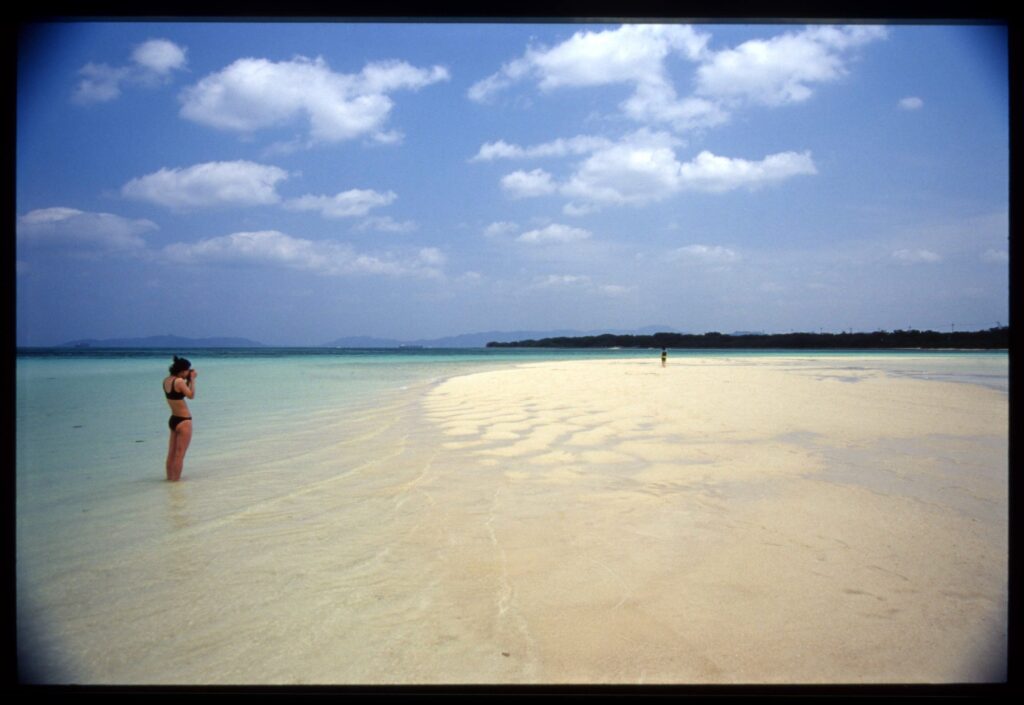
Kondoi Beach on Taketomi Island has very shallow, calm, bright turquoise water, which makes it a favorite with families. At low tide, a sandbar may appear offshore. Because it is so shallow, check the tide times if you want to swim rather than wade. Taketomi is an easy ferry ride from Ishigaki Port, and its traditional village of red-tiled houses is worth exploring too.
When Is Beach Season in Okinawa?
Official swimming beaches usually open with umibiraki (sea opening) ceremonies from around late March to April, and many keep lifeguards and nets in place through about October. Dates differ from beach to beach, so check before you go.
- April to June: pleasant water and fewer crowds, though the rainy season usually runs from around mid-May to late June.
- July and August: hottest water and most reliable sunshine, but also the busiest beaches and typhoon risk.
- September and October: warm water and fewer families once school is back, with some typhoon risk.
- November to March: cool for most swimmers, though the beaches are lovely for walks, and snorkeling or diving with a wetsuit is still possible.
Jellyfish Nets and Habu Jellyfish
The habu jellyfish is a box jellyfish with a dangerous sting. Okinawa Prefecture issues a habu jellyfish advisory each summer, roughly from June to September, and the risk can extend from about May to October. Many managed beaches install jellyfish prevention nets during this time.
- Swim inside the netted area at managed beaches.
- Wear a rash guard or full-length swimsuit to reduce exposed skin.
- If someone is stung by a habu jellyfish, get them out of the water calmly, pour plenty of vinegar on the sting without rubbing, remove tentacles carefully, cool the area, and seek medical help. Vinegar bottles are often provided at managed beaches.
- Ask lifeguards for advice on other stinging species, as first aid can differ.
Beach Safety Tips
Currents and the reef
Most Okinawan beaches are protected by an outer reef, but water rushing in and out through gaps in the reef can create strong currents, especially when the tide is changing. Stay inside marked areas, don’t swim out toward the reef edge, and never swim alone at natural beaches.
Wear reef shoes
Coral, rocks, and sea urchins can cause painful cuts, and a few reef creatures, such as stonefish and cone shells, are venomous. Wear reef shoes or water shoes, look but don’t touch, and never pick up shells that may still have animals inside.
Protect the coral
Choose a coral-friendly sunscreen, ideally one free of oxybenzone and octinoxate, and consider covering up with a rash guard instead of using lots of sunscreen. Don’t stand on coral, and don’t take coral, shells, or star sand home. Many reefs are protected, and healthy coral keeps these beaches beautiful.
Respect the weather
Swimming is prohibited when red flags are flying, and beaches close during and after typhoons. Even on a sunny day after a storm, waves and currents can remain dangerous.
Practical Tips
- Rent a car on the Main Island, Miyako, and Ishigaki; many beaches are hard to reach by public transport.
- Bring a towel, water, snacks, a hat, and cash, as smaller beaches may have few facilities.
- Check tide times for snorkeling and for shallow beaches such as Kondoi.
- Arrive early in summer for parking and shade.
- Take all rubbish home with you; bins are rare.
- Avoid alcohol before swimming, and keep a close eye on children.
Frequently Asked Questions
What is the best beach in Okinawa?
It depends on your plans. For an easy day from Naha, try Azama Sunsun, Araha, or Sunset Beach. For world-class water, head to Furuzamami on Zamami or Yonaha Maehama on Miyako.
Can you swim in Okinawa all year?
You can, but most managed beaches are only lifeguarded from around spring to autumn, and the sea is cool in winter. Most visitors swim from around April to October.
Are there jellyfish in Okinawa?
Yes. Habu jellyfish are present in summer, roughly May to October. Swim inside jellyfish nets at managed beaches, wear a rash guard, and know the vinegar first aid.
Can you swim at Kabira Bay?
No. Swimming is prohibited at Kabira Bay because of currents, boat traffic, and pearl farming. Take a glass-bottom boat instead.
Do I need reef shoes in Okinawa?
They are strongly recommended. Coral, rocks, and sea urchins are common, and reef shoes protect your feet and the reef.
Are Okinawa’s beaches free?
Most beaches are free to enter, but some managed and resort beaches charge for parking, showers, lockers, or rentals.
What’s the best island for beaches?
The Kerama Islands are closest to Naha and easy to visit on a day trip. Miyako is known for long white-sand beaches and very clear water, while the Yaeyama Islands combine beaches with coral reefs and jungle.
Wherever you go, check the conditions, swim where it is safe, and take a moment to appreciate Okinawa’s reefs. Treat them gently, and they will keep these beaches beautiful for years to come.