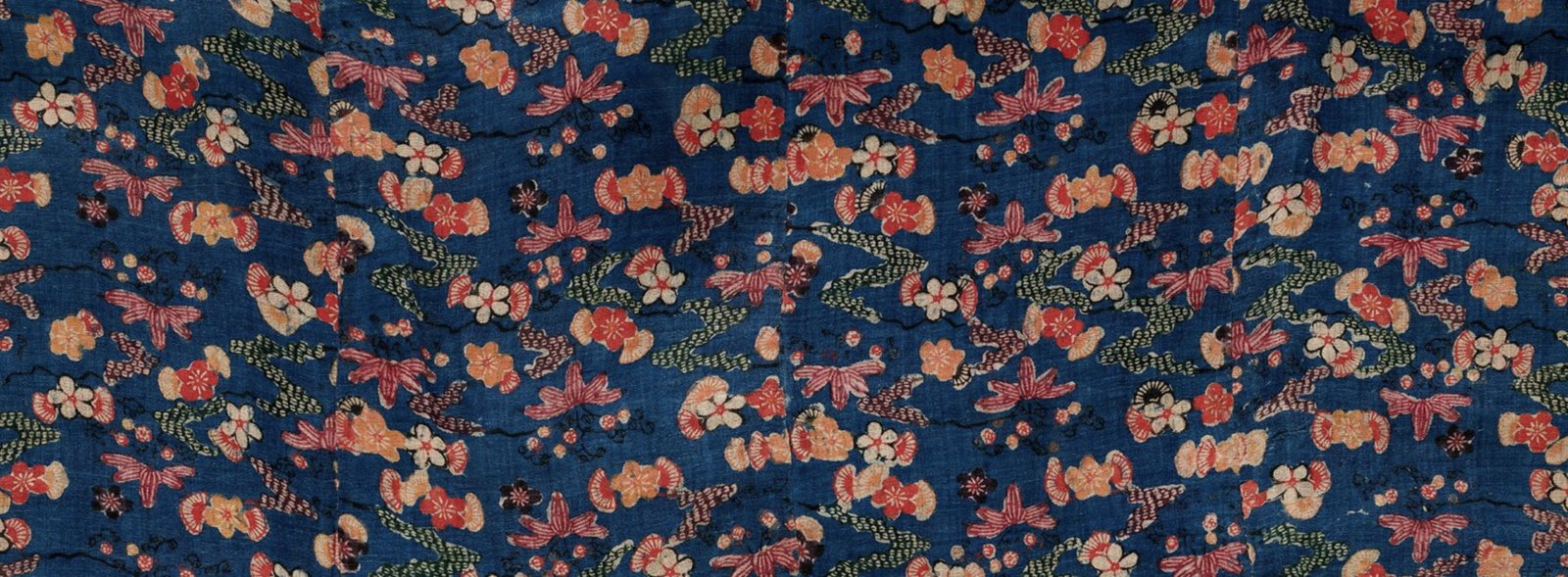
Our new Ryukyuan Textiles section is now live: a visitor’s guide to the dyed and woven cloth of Okinawa, known in Japanese as senshoku (染織, “dyeing and weaving”), with a separate page for each of 18 textile traditions. If you have ever admired a bright bingata scarf in Naha or a blue minsā belt on Ishigaki and wondered where it came from, this is the place to start.
What’s in the New Section
Okinawa Prefecture has 16 crafts on Japan’s national list of Traditional Crafts, and 13 of them are textiles. Each of the 13 has its own page, from the royal weaves of Shuri to the ramie cloth of Miyako and the silk of Kumejima. We have also added five related traditions that are not on that list in their own right:
- Shuri Hanakura-ori (首里花倉織, Shuri hanakura-ori), a royal summer silk
- Yaeyama Kōfu (八重山交布, gunbō), the everyday cloth of Yaeyama
- Tonbyan (桐板, tonbyan), a sheer summer cloth that is no longer made
- Ryukyu Indigo (琉球藍, Ryūkyū ai), the blue dye behind many of these cloths
- Amami Ōshima Tsumugi (本場奄美大島紬, honba Amami Ōshima tsumugi), a related mud-dyed silk from the Amami Islands of neighbouring Kagoshima Prefecture
Two at-a-glance tables on the main page compare every textile by place and type, with its designation status, so you can see the whole picture in a minute.
Four to Start With
- Ryukyu Bingata (琉球びんがた, Ryūkyū bingata): bright stencil-dyed cloth once worn by Ryukyu royalty and aristocrats, and still worn on stage in classical Ryukyuan dance.
- Kijoka Bashōfu (喜如嘉の芭蕉布, Kijoka no bashōfu): light, crisp cloth woven from banana fibre in a village in the far north of the Main Island, revived after the war by Taira Toshiko (平良敏子).
- Yaeyama Minsā (八重山ミンサー, Yaeyama minsā): the cotton belt with its row of five squares and row of four, woven on Ishigaki and on Taketomi Island.
- Tonbyan: a translucent cloth of Ryukyu’s elite, woven from imported thread. It has not been made for generations, and experts still disagree about its fibre.
See It for Yourself
The best part is that many of these crafts are still alive in working studios you can visit. In Naha, the Naha City Traditional Arts and Crafts Center (那覇市伝統工芸館) at Tenbusu Naha on Kokusai Street offers bookable bingata dyeing and Shuri-ori weaving experiences. Further afield, Kumejima’s Yuimāru-kan, the Yomitan Traditional Crafts Center and Azamiya Minsā Kōgeikan on Ishigaki all run hands-on sessions. Most experiences need booking ahead, so check the official websites before you go. The guide’s Where to See, Buy and Try section has the details, plus tips on spotting a genuine piece.
Checked Against Japanese Sources
As with the rest of the site, we checked names, dates and designations against official Japanese-language sources: Okinawa Prefecture, the Agency for Cultural Affairs, the national traditional crafts association, producers’ cooperatives and museums. Every textile page ends with its own Sources & Further Reading list, and where the experts disagree, as with tonbyan’s fibre, we say so.
We hope the new section adds colour to your trip. Explore Ryukyuan Textiles.
Sources: see the full bibliography in our Ryukyuan Textiles guide.