Okinawa can suit almost any budget, from backpackers in Naha hostels to families in beachfront resorts. Your biggest costs will be accommodation and transport, and both depend heavily on when you travel. Japanese holiday periods can push prices up sharply, while quieter months offer real bargains.
This guide gives approximate ranges for the main costs of an Okinawa trip, so you can plan with confidence. Prices change with season, demand, and exchange rates, so treat these as a starting point rather than a quote.
US dollar figures are rough conversions at around ¥155 to US$1 (late 2026) and are rounded. Check the current rate before you travel.
Sample Daily Budgets (Per Person)
| Travel style | Approximate daily cost | What it looks like |
|---|---|---|
| Budget | ¥8,000–12,000 (about US$50–80) | Hostel or simple guesthouse, buses and monorail, casual local food |
| Mid-range | ¥18,000–35,000 (about US$115–225) | Business or mid-range hotel, shared rental car, a tour or two, restaurant dinners |
| Comfort / resort | ¥45,000+ (about US$290+) | Beach resort, rental car, guided activities, nicer dining |
These figures assume two people sharing a room and a car where relevant. Solo travelers will pay more per person for rooms and cars.
Accommodation
| Type | Approximate price per night | Notes |
|---|---|---|
| Hostel dorm bed | ¥3,000–5,000 (about US$20–30) per person | Mostly in Naha; some on Ishigaki and Miyako |
| Business hotel (room) | ¥8,000–18,000 (about US$50–115) | Compact, clean, often near monorail stations |
| Minshuku (per person) | ¥6,000–12,000 (about US$40–80) | Family-run; often includes dinner and breakfast |
| Mid-range hotel (room) | ¥15,000–30,000 (about US$95–195) | More space, sometimes a pool or sea view |
| Beach resort (room) | ¥30,000–80,000+ (about US$195–515+) | Much higher in peak summer and holidays |
Prices can double or more during Golden Week, July and August, Obon, and New Year. Okinawa Prefecture also plans to introduce an accommodation tax for stays from February 1, 2027, charged as a small percentage of the room rate with an upper limit per night. Hotels will add it to your bill.
For help choosing an area, see our guide to where to stay in Okinawa.
Getting There and Around
Flights
Domestic flights from Tokyo or Osaka to Naha vary enormously. Low-cost carriers can be very cheap when booked early, while last-minute holiday fares on full-service airlines can be expensive. Inter-island flights from Naha to Miyako or Ishigaki follow a similar pattern. See getting to Okinawa for tips.
Rental cars
| Item | Approximate cost | Notes |
|---|---|---|
| Compact car, per day | ¥3,000–15,000 (about US$20–95) | Lower off-season; much higher at Obon and New Year |
| Extra insurance cover, per day | ¥1,000–2,500 (about US$6–16) | Worth considering |
| Fuel | Varies | Compact cars are economical; you pay to refill before returning |
| Expressway tolls | Varies by distance | The Okinawa Expressway is about 57 km (35 mi) end to end |
| Hotel parking, per night | Free to ¥2,000+ (about US$13+) | Often charged in Naha; usually free at resorts |
Public transport
The Yui Rail monorail is inexpensive for short trips around Naha. A 1-day pass costs ¥1,000 (about US$6) and a 2-day pass ¥1,800 (about US$12), valid for 24 or 48 hours from purchase. Route buses are also good value, though slower; multi-day bus passes are available. Taxis in Naha are reasonably priced for short hops, and splitting one between three or four people can cost little more than the bus.
Ferries
Ferries to the Kerama Islands are a highlight of many trips. As an example, the high-speed boat from Naha to Zamami is ¥3,950 one way for adults (about US$25), and the slower car ferry is ¥2,900 (about US$19), according to Zamami Village’s fare table. A small visitor tax is collected on boarding. Ferries from Ishigaki to Taketomi and other Yaeyama islands are generally cheaper because the distances are shorter.
Food and Drink
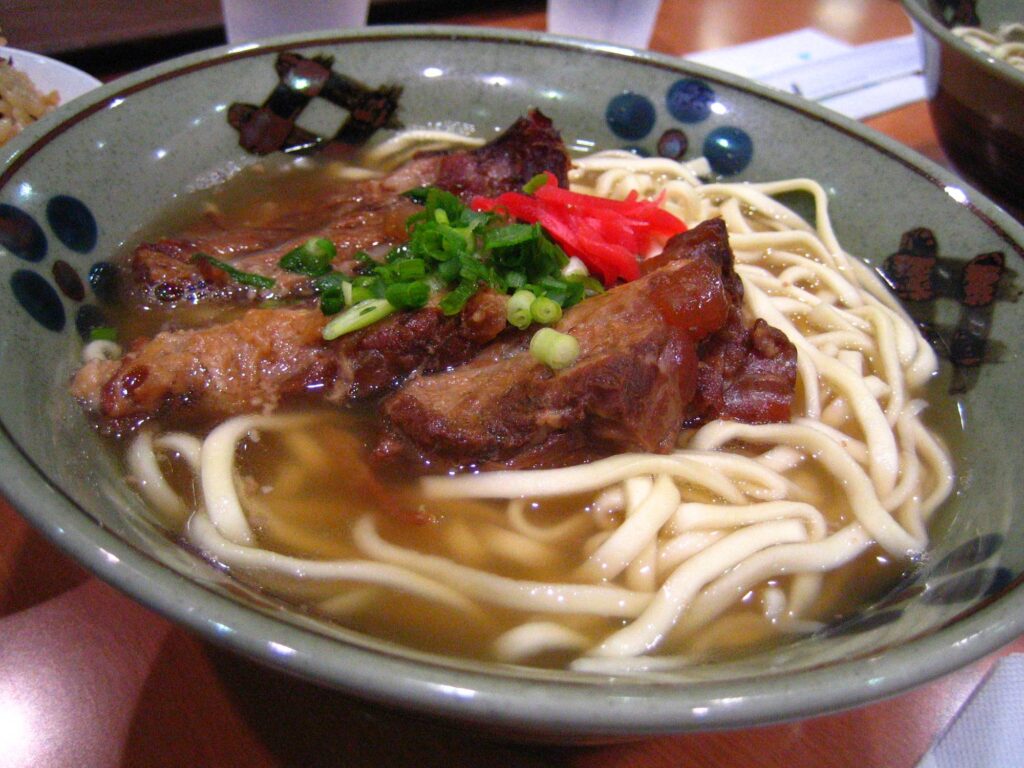
Eating well in Okinawa doesn’t have to cost much. Local diners, markets, and convenience stores keep everyday meals affordable.
| Meal | Approximate cost |
|---|---|
| Convenience store breakfast or snack | ¥400–800 (about US$3–5) |
| Bowl of Okinawa soba | ¥700–1,200 (about US$5–8) |
| Set lunch at a local restaurant | ¥1,000–1,800 (about US$6–12) |
| Dinner at an izakaya, with a drink or two | ¥3,000–6,000 (about US$20–40) |
| Resort or fine-dining dinner | ¥8,000+ (about US$50+) |
| Local beer or awamori at a bar | ¥500–900 (about US$3–6) |
Prices in Japan usually include 10% consumption tax (8% for most take-out food and groceries). Tipping is not expected.
Activities and Sights
Many of Okinawa’s best experiences are free: beaches, coastal walks, sacred sites like many local utaki, markets, and festivals. For paid attractions and tours, here are typical ranges:
| Activity | Approximate cost |
|---|---|
| Okinawa Churaumi Aquarium, adult | ¥2,180 (about US$14) |
| Museums and historic sites | Free to ¥1,000 (about US$6) in many cases |
| Guided snorkeling tour | ¥5,000–12,000 (about US$30–75) |
| Trial dive for beginners | ¥10,000–20,000 (about US$65–130) |
| Two-tank fun dive for certified divers | ¥12,000–22,000 (about US$75–140) |
| Glass-bottom boat tour | ¥1,500–3,000 (about US$10–20) |
| Kayak or jungle tour | ¥6,000–15,000 (about US$40–95) |
Tour prices often include equipment rental and hotel pick-up; check what’s included before comparing. The Churaumi Aquarium price is from its official website.
Money-Saving Tips
- Avoid Japanese holiday peaks. Traveling in late May, June, or from November to February can cut accommodation and car costs significantly.
- Book early. Flights, cars, and small-island accommodation all get more expensive as dates approach.
- Base yourself in Naha for a few nights and use the monorail rather than renting a car every day.
- Eat local. Okinawa soba shops, set-lunch restaurants, and markets offer great food at modest prices.
- Choose a minshuku on the small islands; meals are often included.
- Look for day passes on the monorail and buses if you’ll be making several trips.
- Shop tax-free. From November 1, 2026, Japan is moving to a refund system: eligible visitors pay the full price, then claim the consumption tax back before leaving Japan. Keep your receipts and allow time at the airport.
Paying in Okinawa
Credit cards are widely accepted at hotels, larger shops, and many restaurants, and contactless and IC card payments are increasingly common. Smaller shops, local diners, beach facilities, and some island businesses still prefer cash, so carry some yen. ATMs at convenience stores and post offices generally accept foreign cards.
Frequently Asked Questions
Is Okinawa expensive to visit?
It depends on when you go. Peak holiday periods are expensive, but outside them Okinawa offers good value, with affordable food and a wide range of accommodation.
How much money do I need per day in Okinawa?
Roughly ¥8,000–12,000 (about US$50–80) per person on a tight budget, ¥18,000–35,000 (about US$115–225) mid-range, and ¥45,000 (about US$290) or more for resort stays, all approximate.
Is Okinawa cheaper than Tokyo?
Food and local transport are often a little cheaper, but resort accommodation and rental cars in peak season can be just as expensive.
Do I need cash in Okinawa?
Cards are widely accepted, but it’s wise to carry cash for small restaurants, markets, beach facilities, and the outer islands.
Should I tip in Okinawa?
No. Tipping is not part of Japanese culture, and good service is included.